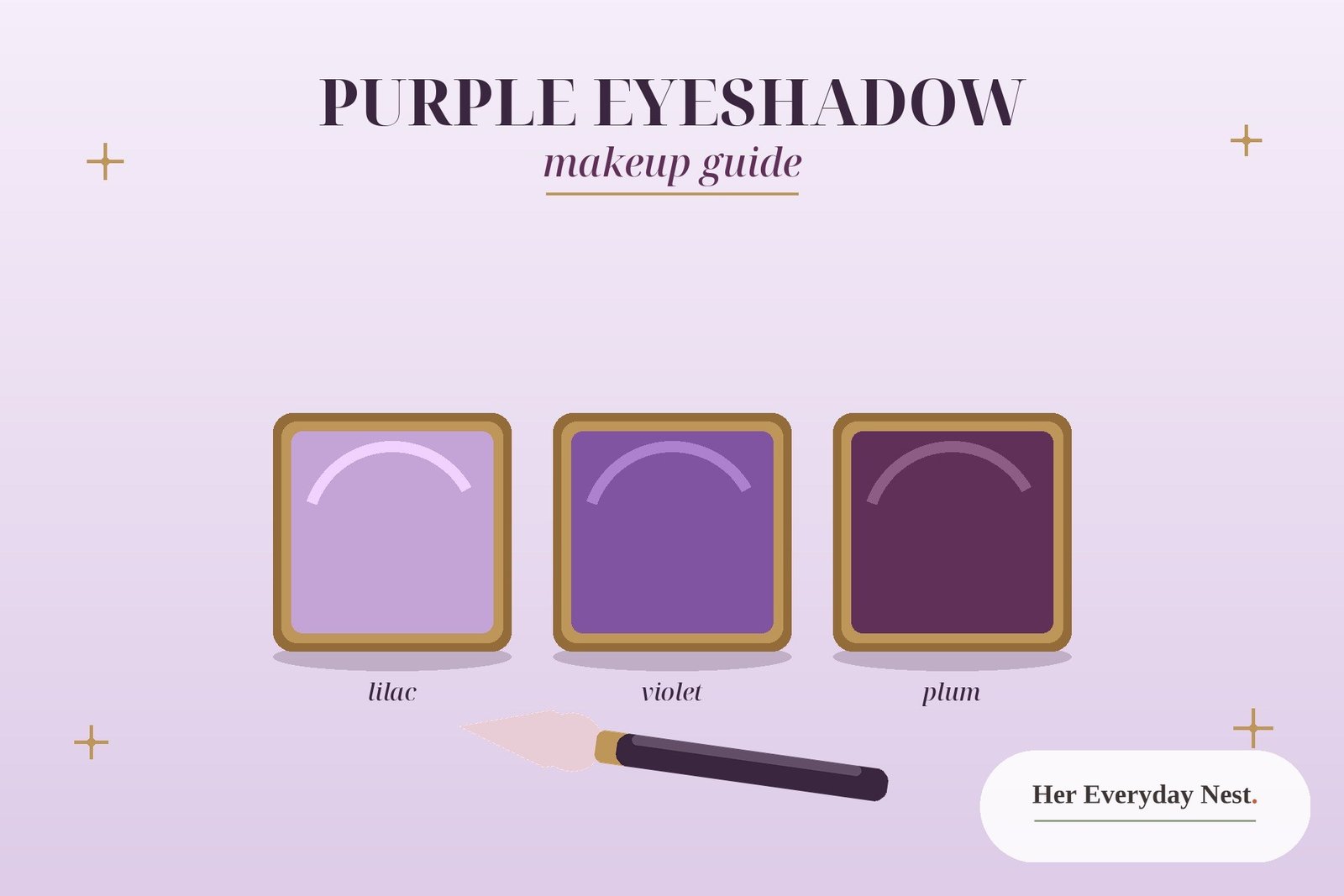
Purple Eyeshadow Makeup Guide: How to Wear It and What Looks Best
Purple eyeshadow makeup has a reputation for being hard to wear, and honestly, that reputation is unfair. Pick the wrong shade and the wrong placement and yes, it can look bruised or costumey. Pick the right shade for your eye color and skin tone, though, and purple becomes one of the most flattering colors in your makeup bag. It brightens brown eyes, makes green eyes look almost electric, and gives blue eyes a soft, romantic contrast that neutrals simply cannot match.
This guide covers everything you need to wear purple with confidence: how to choose your shade, seven wearable looks from daytime lilac to a plum smoky eye, a step-by-step application routine, what to pair it with, and the mistakes that make purple go wrong. No professional skills required — just the right shade and a blending brush.
Why Purple Eyeshadow Makeup Works on Almost Everyone
Here is the color theory in one sentence: purple sits opposite yellow-green on the color wheel, which means it creates natural contrast with the warm and golden tones found in most eyes. That contrast is why purple eyeshadow makeup makes eye color look more vivid instead of competing with it.
Green eyes get the biggest payoff, because purple is green’s direct complement. Brown eyes benefit too, because purple pulls out the gold, amber, and green flecks hiding in a brown iris. Blue eyes look brighter against soft lavender, and hazel eyes — which shift between green and brown — pick up whichever tone the purple leans toward.
The second reason purple works is range. Purple is not one color. It runs from the palest lilac to the deepest eggplant, and within that range there is a wearable version for every skin tone, every age, and every occasion. The trick is never the color itself. It is the depth, the undertone, and the placement.
How to Pick the Best Purple Shade for Your Eye Color
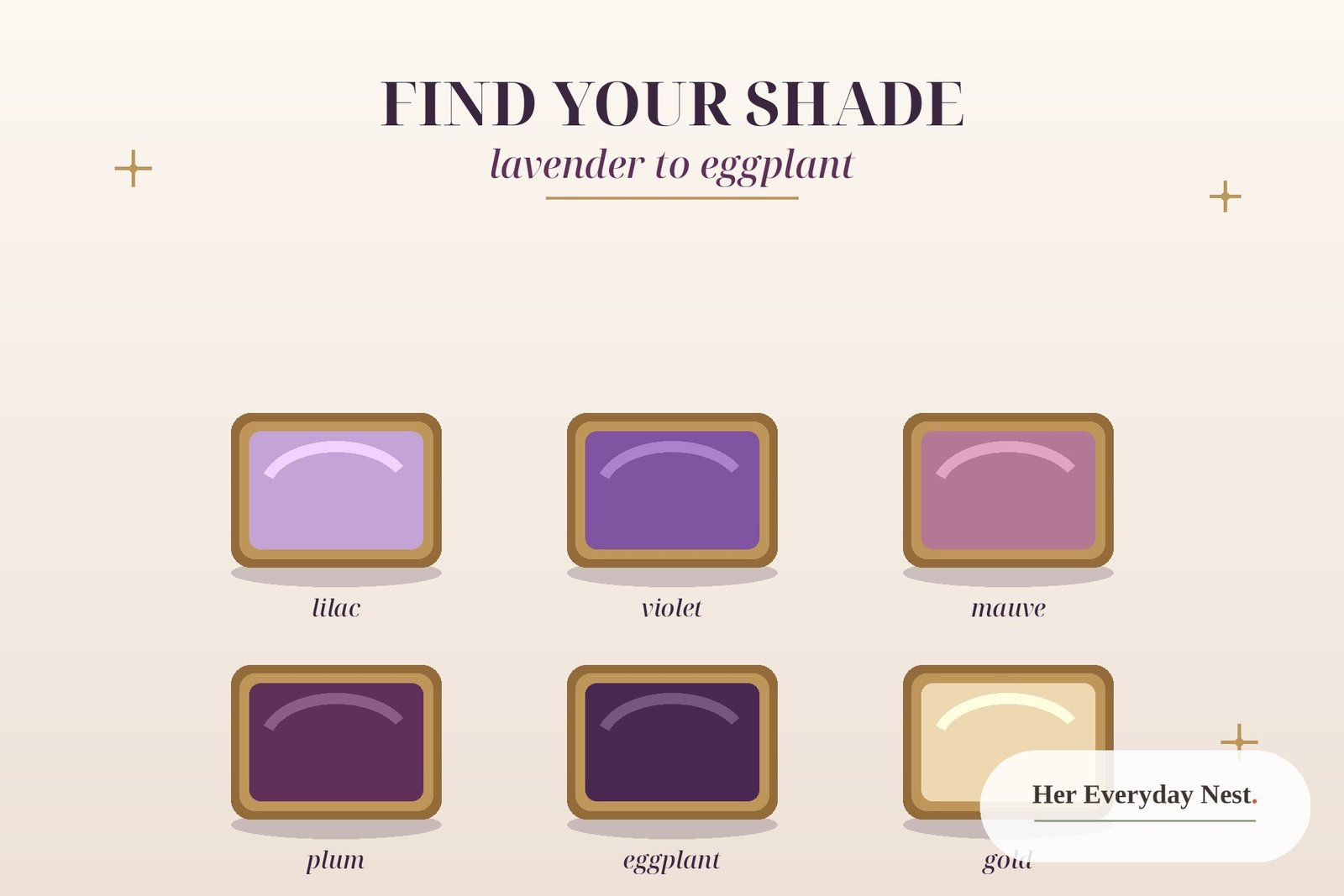
Start with your eyes, then check your skin tone. Warm purples (plum, berry, mauve with red undertones) flatter warm skin and green or hazel eyes. Cool purples (lavender, lilac, violet with blue undertones) flatter cool skin and blue eyes. Brown eyes can wear both, which is why they are the easiest to shop for.
Purple Eyeshadow for Green and Hazel Eyes
Green eyes and purple eyeshadow are a perfect match. Plum, eggplant, and burgundy-leaning purples create the strongest contrast, and they make green irises look brighter and more saturated. If your hazel eyes have gold flecks, add a small touch of gold shimmer at the inner corner — it picks up the gold while the purple deepens the green. Muted mauve is your safest everyday option, while a rich violet is your going-out shade.
Purple Eyeshadow for Brown Eyes
Brown eyes can wear nearly every purple, which makes them the most forgiving canvas. Deep plum and amethyst bring out golden flecks, while cooler violets and lavender create a brighter, wide-awake contrast. If you have very dark brown eyes, go a shade deeper than you think you need — pale lilac can disappear on deep skin and dark eyes, while a saturated violet will actually show up. A warm brown in the crease softens the transition between a plum lid and your skin.
Purple Eyeshadow for Blue Eyes
Blue eyes look beautiful with soft, cool purples. Lavender across the lid with a soft brown in the crease is the classic combination — the warmth of the brown keeps the lavender from looking cold, and the lavender makes the blue of your eyes look clearer. Avoid very dark eggplant all over the lid, which can overpower lighter eyes. Keep the depth at the lash line instead, and let the lid stay light.
Purple Eyeshadow for Your Skin Tone
Fair skin looks best in soft lilac, pink-lilac, and silvery lavender, with the deepest shade — a plum or violet pencil — kept close to the lash line. Medium skin can wear orchid, amethyst, and warm violet, and if a lilac looks grey on you, blend a little bronze or peach through the crease to bring warmth back. Deep skin looks stunning in rich, saturated violets and metallic lilacs; pale pastels can look chalky, so go bold with the pigment and use a bright lilac as a pop of color at the inner corner or along the lower lash line.
7 Purple Eyeshadow Makeup Looks to Try
You do not need seven palettes for these looks. One palette with a light lilac, a mid-tone violet, a deep plum, and a neutral taupe covers all of them.
1. Soft Lilac for Everyday Wear
Sweep a light layer of lilac across the lid and blend it just above the crease. Finish with a thin line of brown eyeliner and mascara. This is the easiest entry point into purple eyeshadow makeup, and it reads as fresh and polished rather than colorful. It works for the office, school pickup, and daytime events.
2. Pink and Purple Shimmer
Blend soft pink around the edges of a lilac or violet shadow, then tap a shimmer onto the center of the lid. Keep the shimmer sheer for daytime, or add another light layer for evening. The pink warms up the purple and stops it from looking cold on the skin.
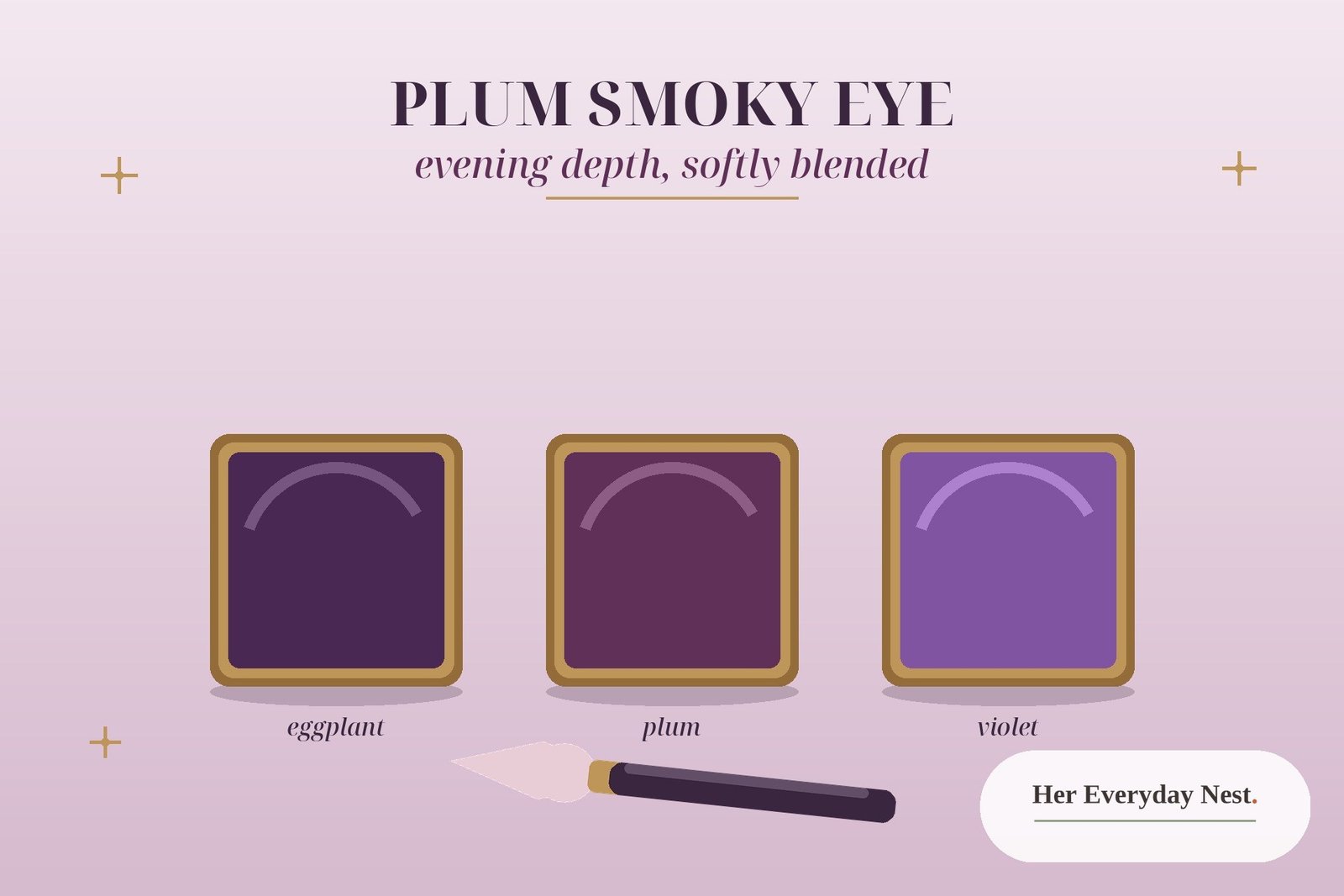
3. Plum Smoky Eye
Plum gives purple eye makeup a richer evening finish, especially with defined lashes. Keep the lid color visible while adding depth at the outer corner with a darker plum, brown, or charcoal. Leave the finish matte for a velvety effect, or add shimmer to the center for dimension. If you already love a classic smoky eye, this is the easiest purple version to master — our guide to a soft glam smoke makeup uses the same blending technique with a different color story.
4. Purple Winged Shadow
Use a small angled brush to press violet or plum shadow along the upper lashes, then extend it into a short, soft wing. A mostly neutral lid lets the purple stand out, which makes this look ideal if you want color without a full wash of it. It also pairs beautifully with a sculpted fox eye shape if you like a lifted finish.
5. Violet and Gold for Evening
Blend violet across the lid and into the outer corner, then add gold shimmer to the center or the inner corner. Gold is purple’s best friend — the warmth of the gold balances the coolness of the violet, and the combination looks expensive on every skin tone. This is the look to choose for date night, a holiday party, or any evening when you want your eyes to be the focus.
6. Monochrome Mauve
Mauve is the most wearable purple of all, because it sits halfway between pink and purple. Wear a matte mauve in the crease, a slightly deeper mauve on the lid, and a mauve blush on the cheeks. The monochrome effect looks intentional and modern, and it is the most forgiving purple look for beginners — there are no harsh edges to blend away.
7. Purple Lash Line Pop
If a full purple lid still feels like too much, try purple only along the lower lash line. Smudge a violet or plum pencil under your lower lashes, then soften it with a small brush. It adds color that people notice up close in conversation, without reading as colorful from across the room. Keep the rest of the eye neutral and let the lash line do the work.
How to Apply Purple Eyeshadow Makeup, Step by Step
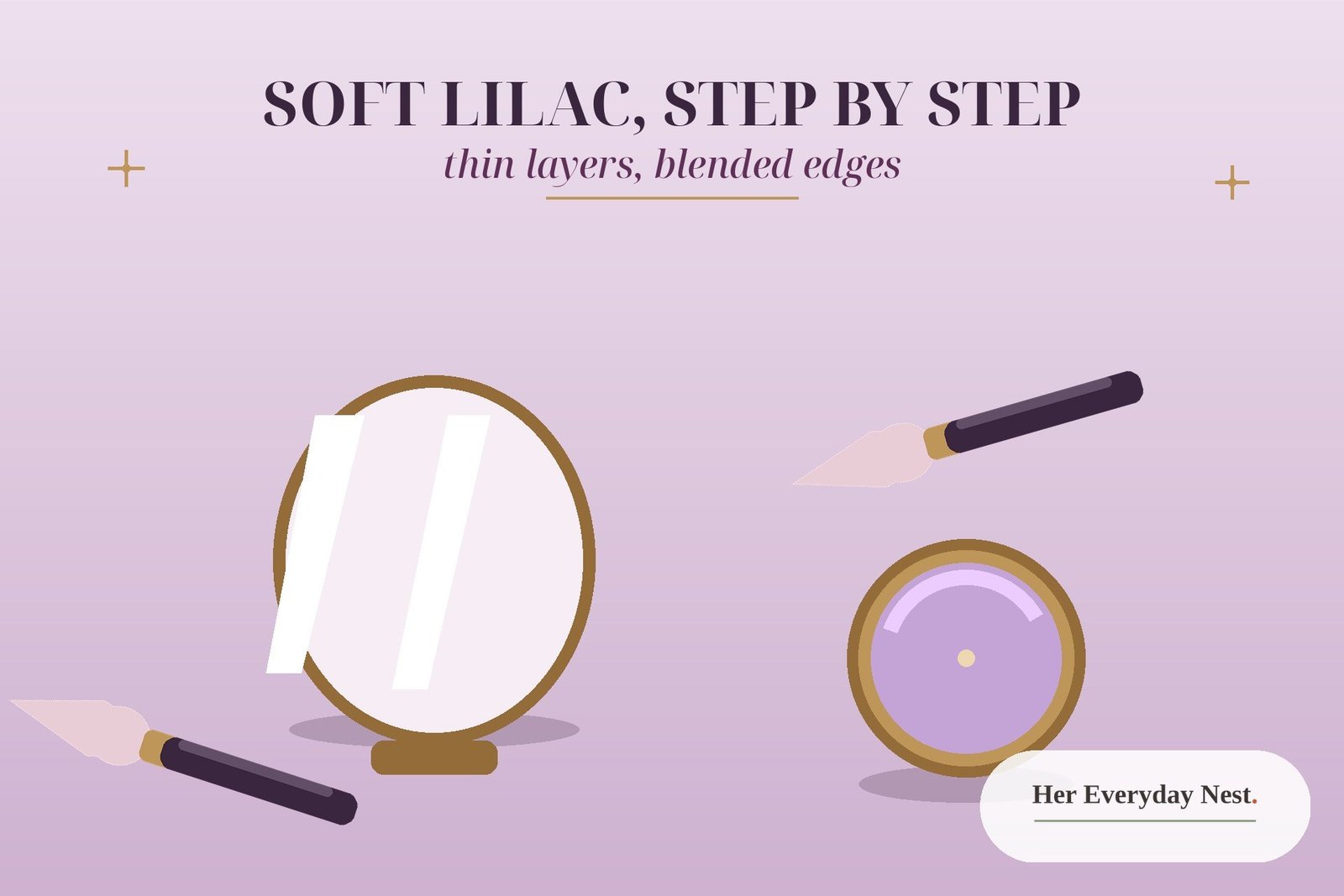
Follow these steps for any of the looks above. The order matters more than the products: thin layers, blended edges, and depth only where you want it.
- Prime your lids. Apply a thin layer of eye primer and let it settle. Primer keeps purple from creasing and makes the color look richer with less product. If you do not own primer, a thin layer of concealer set with translucent powder works as a base.
- Lay down a neutral transition shade. Sweep a matte neutral close to your skin tone through the crease. This gives the purple a soft edge to blend into, which is the single biggest difference between a polished look and a harsh one.
- Press the purple on in thin layers. Use a flat brush to press your mid-tone purple onto the lid, adding a little at a time until the color looks even. Pressing beats sweeping here — it puts more pigment on the lid with less fallout underneath your eyes.
- Add depth at the outer corner. Place a small amount of your deeper shade — plum, charcoal, or dark brown — at the outer corner and along the upper lashes, then blend it into the purple. Keep the deepest color on the outer third only.
- Buff the edge, then stop. Use a clean blending brush to soften the boundary between the shadow and your skin, working mainly around the edge so the purple on the lid stays visible. Over-blending is how purple turns muddy, so stop while the color still looks intentional.
- Highlight and define. Tap a light shimmer at the inner corner and under the brow bone, line close to the lashes with brown or plum eyeliner, and finish with two coats of mascara. Mascara is what stops purple tones from looking sleepy.
What to Pair With Purple Eyeshadow
Purple eyeshadow makeup looks best when the rest of your face stays calm. Let the eyes be the statement and keep everything else in the same family.
Lips: Nude, soft pink, mauve, and berry lipsticks all work with purple eyes. Avoid a second bold color — a red lip with a purple eye competes for attention and the face looks busy. For evening, a deep berry lip with a plum smoky eye is the one exception, because the two shades share the same color family.
Blush: A sheer lilac-pink or soft rose blush along the cheekbones echoes the eye color without matching it exactly. Skip orange or coral blush with purple eyes — the warm-cool clash can look accidental.
Liner and lashes: Brown eyeliner softens a purple eye for daytime, while plum or deep eggplant liner adds drama without the harshness of black. Black mascara defines the lashes; skip colored mascara unless purple is the only color story you want.
The rest of the face: Keep foundation fresh and light, and set your under-eye concealer well. Purple pigment has a habit of migrating, and a clean, set base makes any fallout easy to brush away.
5 Mistakes That Make Purple Eyeshadow Look Wrong
1. Skipping primer. Purple shows creasing and patchiness faster than neutrals. Primer is not optional with this color family.
2. Using too much, too fast. Purple is highly pigmented. Build it in thin layers — you can always add more, but taking it away means starting over.
3. Blending with a dirty brush. A brush carrying leftover brown or black will turn your purple grey and muddy. Use a clean blending brush for the edges.
4. Pairing purple with black eyeliner all the way around. Heavy black liner on both the top and bottom lash lines with a purple lid can look harsh and bruised. Keep black liner to the upper lashes, or swap it for plum or espresso.
5. Ignoring your undertone. A cool lavender on very warm skin can look grey, and a warm plum on very cool skin can look orange-brown. If a purple looks wrong on you, the undertone is usually the problem — not the color itself. Try the opposite temperature before giving up on purple entirely.
Purple Eyeshadow for Mature and Hooded Eyes
Purple can be especially flattering on mature eyes, because a soft wash of color adds dimension without the heaviness of a dark smoky eye. The rules shift slightly: choose satin and soft shimmer finishes over glitter, which settles into fine lines, and favor muted violet, smoky mauve, and soft plum over bright, saturated violet.
Placement matters more than product. Apply and check the color with your eyes open, so the makeup stays visible in a natural expression. Blend a small amount of neutral shadow slightly above your natural crease to create dimension, and keep the deepest shade close to the lash line rather than high on the lid. A thin line of espresso or deep plum eyeliner gives definition without the stronger contrast of black. The result is a soft purple eye that looks considered and polished, not dramatic.
How to Take Purple Eyeshadow From Day to Night
Start the day with the soft lilac look: lilac on the lid, brown in the crease, mascara. For evening, you do not need to remove anything. Deepen the outer corner with plum, tap shimmer onto the center of the lid, smudge a plum pencil along the upper lash line, and add a second coat of mascara. Swap the nude lip for a berry shade and you have a full evening look in under five minutes. If you are planning a special occasion, the same day-to-night thinking applies to the rest of your face — our guide on how to choose your wedding day makeup walks through building a look that photographs well from morning to midnight.
Eye Safety: A Quick Word Before You Start
Only use products labeled for use on the eyes, and check the shade’s directions — some pigments that are fine on cheeks are not approved for the eye area in the United States. The U.S. Food and Drug Administration publishes practical guidance on eye cosmetic safety. Keep brushes clean, do not share eye makeup, and discard products after an eye infection. A detailed shade-by-shade guide with sensitive-skin tips is also available from Red Apple Lipstick’s purple eyeshadow guide.
Purple eyeshadow makeup is not a bold move reserved for makeup artists. It is a versatile, flattering color family with a wearable shade for every eye color and skin tone — soft lilac for daytime, mauve for the most forgiving everyday look, and plum for evenings when you want depth. Start with one shade, build it in thin layers, blend the edges with a clean brush, and let the rest of your face stay calm. Once you find your purple, you will wonder why you waited so long to try it.
Can anyone wear purple eyeshadow?
Yes. Purple is one of the most universally flattering eyeshadow colors because it ranges from pale lilac to deep eggplant. The key is matching the shade’s depth and undertone to your eye color and skin tone — soft lilac for fair skin, rich violet for deep skin, and plum for green or hazel eyes.
What eye color does purple eyeshadow look best on?
Purple looks best on green eyes, because purple is green’s direct complement on the color wheel and makes green irises look brighter. It also flatters brown eyes by bringing out gold and amber flecks, hazel eyes by deepening their green tones, and blue eyes when worn as a soft lavender.
How do I wear purple eyeshadow without looking bruised?
Build the color in thin layers, blend the edges with a clean brush, and keep the deepest shade on the outer third of the lid only. Pair purple with brown or plum eyeliner instead of heavy black liner, add mascara to keep the eyes looking awake, and keep the rest of your face neutral.
Does purple eyeshadow suit brown eyes?
Yes — brown eyes can wear nearly every purple. Deep plum and amethyst bring out golden flecks, while cooler violets and lavender create a bright contrast. A warm brown blended through the crease softens the transition between a plum lid and your skin.
What lipstick goes with purple eyeshadow?
Nude, soft pink, mauve, and berry lipsticks all pair well with purple eyeshadow. Avoid a second bold color such as bright red, which competes with the eyes. For evening, a deep berry lip works with a plum smoky eye because both shades share the same color family.

Emily Carter is the founder and editor of Her Everyday Nest. After nine years of renting in five apartments across three cities, she's learned how to make any rental feel like home.