
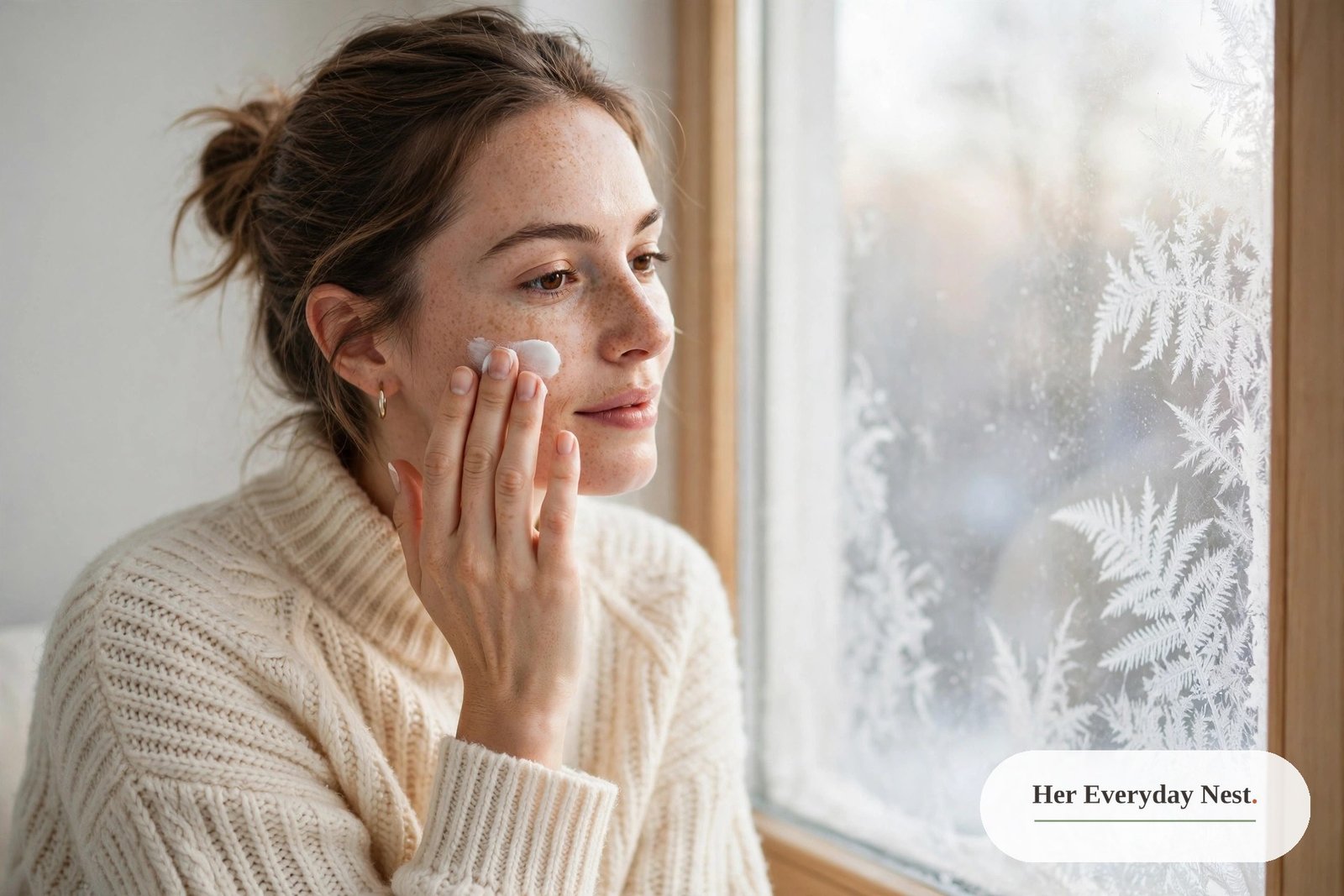
Winter Skincare Prep: The Complete Guide for Every Skin Type
Winter has a way of changing the rules on your skin overnight. One week your moisturizer feels perfect, and the next your cheeks are tight by noon, your lips are flaking, and your foundation is settling into lines you swear were not there in October. That is exactly why winter skincare prep matters more than any single product: it is the small set of swaps you make before the cold settles in, so your skin never has to play catch-up. This guide walks you through the whole thing — why winter is so hard on skin, a simple 7-day prep plan, morning and evening routines, and exactly what changes for dry, oily, combination, sensitive, and acne-prone skin.
Why Winter Is So Hard on Your Skin
Cold outdoor air holds far less moisture than warm summer air, so every time you step outside, the air quietly pulls water out of your skin. Then you come back indoors, where central heating dries the air even further. Dermatologists call the result transepidermal water loss — water escaping through a weakened skin barrier — and it is the reason winter skin feels tight, looks dull, and flakes no matter how much lotion you layer on.
Three things make it worse. First, hot showers feel wonderful in December, but hot water strips away the natural oils that hold moisture in. Second, the exfoliants and retinoids that worked beautifully in July can suddenly sting in dry air. And third, most people keep using their lightweight summer products long after the weather has changed. Winter skincare prep is simply the act of fixing all three before your skin starts complaining.
When to Start Your Winter Skincare Prep
Start two weeks before the first real cold snap — for most of the US, that means mid to late November. Your skin barrier needs time to adjust, and switching everything on the coldest day of the year is a recipe for irritation. If winter has already arrived where you live, do not worry: start today and follow the 7-day plan below. It works as a reset at any point in the season.
The 7-Day Winter Skincare Prep Plan
Think of this as a gentle runway into winter, one small change a day, so nothing shocks your skin.
Day 1 — Swap your cleanser. Trade any foaming or gel cleanser that leaves your face feeling squeaky for a cream or milky one. If your skin is very dry, a lukewarm-water rinse in the morning is enough.
Day 2 — Upgrade your moisturizer. Move from a light lotion to a cream, and keep an ointment or balm on hand for the driest patches. Creams and ointments hold moisture in far better than lotions because they contain more oil.
Day 3 — Add a hydrating serum. A hyaluronic acid serum applied to damp skin is the single easiest winter upgrade. It pulls water into the skin and makes everything you layer on top work harder.
Day 4 — Set up your humidity. Put a cool-mist humidifier in your bedroom and aim for indoor humidity between 30% and 50%. If a humidifier is not practical, even a bowl of water near a radiator helps.
Day 5 — Protect lips and hands. Start a lip balm with SPF, and keep hand cream at every sink. Hands and lips have thinner skin and almost no oil glands, so they show winter damage first.
Day 6 — Soften your actives. Cut strong exfoliants and retinoids back to once or twice a week, or drop to a gentler strength until spring. Do one gentle exfoliation with a lactic-acid or PHA product to clear away flaky buildup, then leave it alone.
Day 7 — Lock in the routine. Write down your morning and evening steps (the routines below are a good starting point) and switch your sunscreen to a cream texture with SPF 30 or higher. Prep done — now you just maintain it.
Your Winter Skincare Prep Morning Routine
A good winter morning routine is short on purpose. Five steps, in this order:
- Cleanse gently — or just rinse. A cream cleanser, or lukewarm water alone if your skin is dry, is all you need in the morning.
- Hydrating serum on damp skin. Do not towel off completely first; serum works best when skin is still slightly damp.
- Moisturizer — a little more than you used in summer. Smooth it on while skin is still damp to trap the water in.
- Eye cream if you use one. The skin around the eyes is thin and shows winter dryness early.
- Broad-spectrum SPF 30 or higher, every single day. Snow can reflect up to 80% of UV rays, and winter sun still reaches your face, neck, ears, and hands — even on cloudy days.
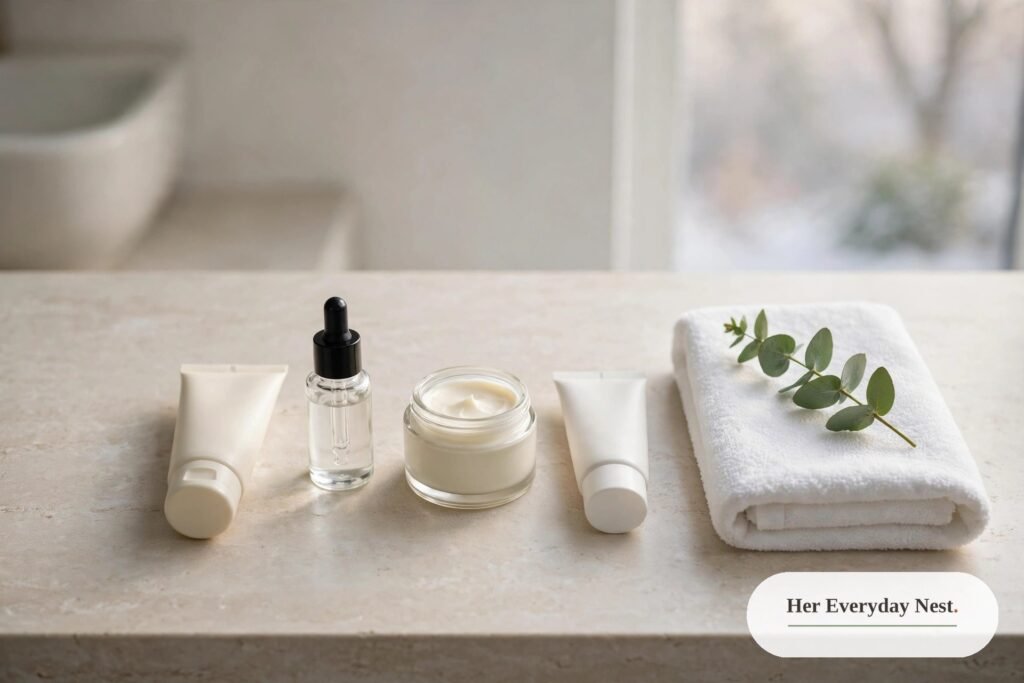
Your Winter Skincare Prep Evening Routine
Evenings are when the real repair happens, so this is where you can be a little more generous.
- Remove makeup and sunscreen first, then cleanse with your gentle cream cleanser.
- Apply any treatment product — a hydrating serum, niacinamide, or your retinoid on its scheduled nights.
- Seal everything in with a richer night cream. For very dry skin, a few drops of facial oil pressed over the cream, or a thin layer of petrolatum-based ointment on the driest areas, works like a blanket.
- Lip balm and hand cream before bed. An overnight hand treatment — cream plus cotton gloves — sounds old-fashioned and works beautifully.
- Run the humidifier while you sleep. Eight hours of moist air does more for winter skin than almost any product.

Winter Skincare Prep for Every Skin Type
Winter does not treat every skin type the same — and your skin type can even shift with the season. Skin that was oily in August can feel tight and flaky by January, which is why the first step of winter skincare prep is re-checking what your skin actually needs right now. Wash your face, wait an hour without applying anything, and look: tight and flaky means dry, shiny in the T-zone only means combination, shiny everywhere means oily, and red or stinging means sensitive.
Dry Skin
Dry skin has the hardest winter. Switch to a cream cleanser and a heavier moisturizer, add a facial oil or ointment at night, and use a hydrating serum twice a day. Look for ceramides, shea butter, squalane, and petrolatum. Keep showers to 5 to 10 minutes in warm — never hot — water, and moisturize while your skin is still damp.
Oily Skin
Oily skin still needs winter care. Dehydrated skin can actually look oilier, because it overproduces oil to compensate. Keep a gentle gel-based cleanser, but do not skip moisturizer — choose a lightweight, oil-free gel-cream with hyaluronic acid or niacinamide. Avoid heavy oils that can clog pores, and keep wearing sunscreen daily.
Combination Skin
Treat the zones separately. Use a mild foaming or gel cleanser, a lightweight moisturizer across the T-zone, and a richer cream on dry cheeks. A hyaluronic acid serum suits the whole face, and niacinamide helps balance the oily areas.
Sensitive Skin
Simplify everything. A fragrance-free routine of three or four products beats a long routine full of actives. Choose a gentle cream cleanser, a ceramide moisturizer, and daily SPF. Calming ingredients like colloidal oatmeal, centella, and panthenol help, and anything that stings should be paused until spring.
Acne-Prone Skin
Winter can make breakouts worse, not better, because a damaged barrier lets irritation in. Use strong acne actives less often, keep the routine gentle, and never skip moisturizer — a lightweight, non-comedogenic cream actually helps breakouts heal. Niacinamide and azelaic acid are good winter-friendly options.
| Skin type | What to change in winter | Key ingredients |
|---|---|---|
| Dry | Cream cleanser, heavier moisturizer, facial oil or ointment at night | Ceramides, shea butter, squalane, petrolatum |
| Oily | Keep a lightweight moisturizer — never skip it | Hyaluronic acid, niacinamide |
| Combination | Richer cream on dry areas, lighter gel on the T-zone | Glycerin, ceramides |
| Sensitive | Simplify to a few fragrance-free products | Colloidal oatmeal, centella, panthenol |
| Acne-prone | Use strong actives less often to avoid irritation | Niacinamide, azelaic acid, gentle hydrators |
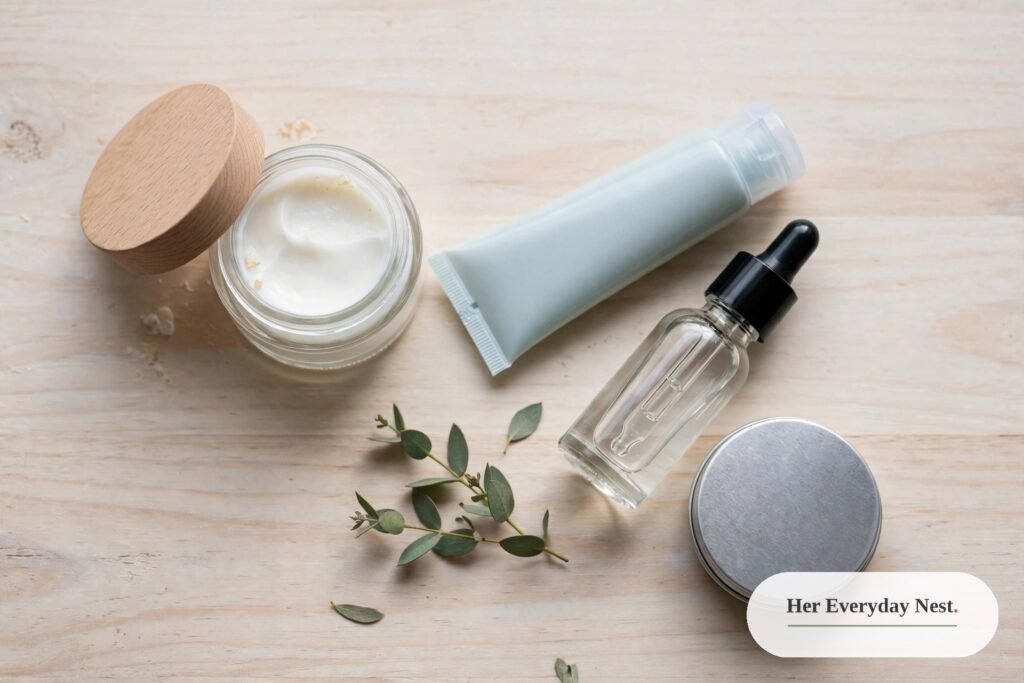
The Winter Ingredient Guide: What to Add and What to Pause
You do not need a new shelf of products — you need the right few ingredients, used consistently.
Add these for winter:
- Hyaluronic acid — pulls water into the skin; apply to damp skin.
- Ceramides — rebuild the skin barrier that cold air weakens.
- Squalane and glycerin — lightweight moisture that layers well under makeup.
- Shea butter and petrolatum — rich sealants for very dry patches, lips, and hands.
- Niacinamide — calms redness and supports the barrier without irritation.
Pause or soften these until spring:
- High-strength AHAs and BHAs — use less often, or switch to gentler PHAs and lactic acid.
- Strong retinoids — drop the frequency if your skin stings or peels.
- Foaming cleansers and alcohol-based toners — both strip the oils winter skin needs.
- Harsh scrubs — never scrub already-flaky skin; it only damages the barrier further.
Beyond Your Face: Lips, Hands, and Body
Your face gets all the attention, but winter hits lips, hands, and body just as hard. Keep a lip balm with SPF in every coat pocket and reapply often — licking dry lips only makes cracking worse. For hands, moisturize after every wash and before going outside, and wear gloves on genuinely cold days. For the body, swap a light lotion for a cream, apply it within five minutes of showering while skin is still damp, and keep showers short and warm. The American Academy of Dermatology gives the same advice for cracked heels — limit showers to 5 to 10 minutes, use a gentle fragrance-free cleanser, and moisturize while skin is still damp.
Winter Makeup That Works With Your Skin
Winter makeup fails when the skin underneath is dry, so prep comes first. Let your moisturizer sink in for a few minutes before foundation, and choose hydrating or satin-finish formulas over matte ones — matte foundation clings to every dry patch. A hydrating primer helps, and cream blush and highlighter blend far more forgivingly than powders on winter skin. If your makeup pills, you are probably layering too many products too fast; give each layer a minute to settle. For party-season looks built on a well-prepped base, our Christmas makeup inspiration guide has 15 soft, festive looks that layer beautifully over winter skin.
7 Winter Skincare Mistakes to Avoid
- Keeping your summer routine unchanged. The season changed — your products should too.
- Taking long, hot showers. They feel great and strip your skin barrier every time.
- Skipping moisturizer because your skin is oily. Dehydrated oily skin just gets oilier.
- Dropping sunscreen in winter. UV reflects off snow and reaches uncovered skin all season.
- Over-exfoliating flaky skin. Flakes are a barrier problem, not a scrubbing problem.
- Applying serums to bone-dry skin. Hyaluronic acid needs damp skin to work.
- Waiting until your skin cracks to start. Winter skincare prep works best before the damage — that is the whole point of the 7-day plan.
When to See a Dermatologist
Most winter dryness improves within two weeks of a proper routine. Book a dermatologist visit if your skin stays cracked, bleeding, or intensely itchy despite consistent care, if you develop a rash that spreads, or if over-the-counter products sting every time you apply them. Conditions like eczema and rosacea often flare in winter and need more than a moisturizer swap. A winter skin assessment is also smart prevention — far better than damage control in January. For a deeper dive into winter-specific guidance, this winter skincare routine guide covers the same dermatologist-backed tips in detail.
Winter Skincare Prep, Wrapped Up
Winter skin does not need a complicated routine — it needs the right routine, started early. Swap to a gentle cleanser, moisturize on damp skin, add a hydrating serum, run a humidifier, and keep wearing SPF. Follow the 7-day prep plan, adjust for your skin type, and your skin will make it through the coldest months comfortable instead of just surviving them. And when the holiday parties start, a well-prepped base is what makes everything else — from festive hairstyles to a touch of holiday glitter — look effortless.
How should I change my skincare routine for winter?
Switch to a gentle, non-foaming cleanser, use a richer cream instead of a light lotion, add a hydrating serum on damp skin, cut back on strong exfoliants, and keep wearing broad-spectrum SPF 30 or higher every day. Short, warm showers and a humidifier at night help too.
Should I still wear sunscreen in winter?
Yes. UV rays reach your skin all year, and snow can reflect up to 80% of them, so daily broad-spectrum SPF 30 or higher on your face, neck, ears, and hands is still important — even on cloudy days.
How often should I exfoliate in winter?
Most people should exfoliate just once or twice a week in winter, with a gentle product like lactic acid or a PHA. If your skin stings, peels, or feels tight afterward, cut back further until spring.
When should I start winter skincare prep?
Start about two weeks before the first real cold snap — for most of the US, that is mid to late November. If winter has already arrived, start today with the 7-day prep plan in this guide; it works as a reset at any point in the season.
What indoor humidity level is best for skin in winter?
Aim for indoor humidity between 30% and 50%. A cool-mist humidifier in the bedroom is the easiest way to get there, and it helps prevent the overnight moisture loss that makes winter skin feel tight in the morning.

Emily Carter is the founder and editor of Her Everyday Nest. After nine years of renting in five apartments across three cities, she's learned how to make any rental feel like home.