

Transform Your Space: 12 Best Small House Organization Tips for a Clutter-Free Home
Living in a small house can feel wonderfully cozy — until the clutter starts closing in. These small house organization tips are not about buying a whole new set of containers or turning your home into a showroom. They are about simple, repeatable systems: what to let go of, where everything lives, and how to use walls, doors, and hidden corners that are already there.
Work through the tips below one at a time, starting with the one that bothers you most. Even two or three changes can make a small home feel noticeably bigger, calmer, and easier to live in. If you love practical home systems, our budget-friendly organization tips and Dollar Tree organizing hacks pair perfectly with this guide, and minimalist bedroom decor shows how the same calm look works in a bedroom.

1. Declutter Regularly
Organization cannot fix overflow. In a small house, the first step is always to let go of things you no longer use, need, or love. Set a simple rhythm — a quick declutter every few months, or one drawer a week — so clutter never builds back up to overwhelming levels.
Sort with four boxes in mind: keep, donate, sell, and toss. Ask the honest question for each item: have I used this in the past year, and would I miss it if it were gone? If the answer to both is no, it is ready to leave. Decluttering first means every storage idea below actually has room to work.
2. Use Vertical Space
When floor space is limited, look up. Walls are the most underused storage in a small house, and tall shelves, wall-mounted cabinets, and hooks can hold an astonishing amount without making a room feel crowded — as long as you keep the top shelves for things you reach for less often.
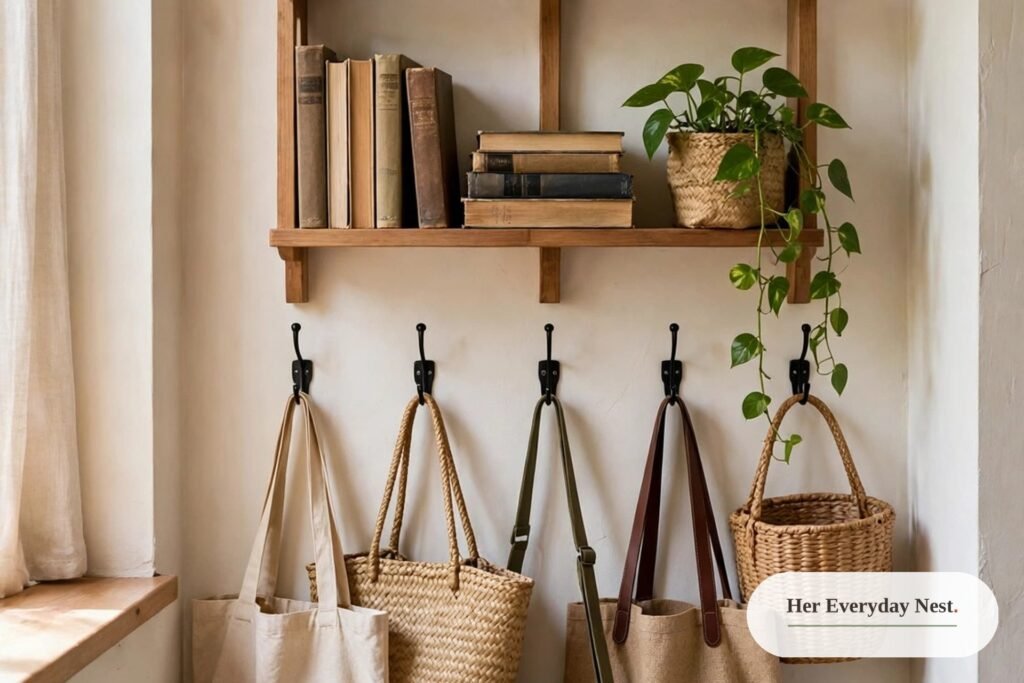
Try floating shelves above a desk or sofa, a tall bookcase in a narrow corner, and stackable bins on closet shelves. Hooks and pegboards by the door, in the kitchen, and in the bathroom turn dead wall space into working storage for bags, hats, utensils, and tools.
3. Invest in Multi-Functional Furniture
In a small home, every large piece should earn its footprint twice. A sofa bed turns a living room into a guest room. A storage ottoman hides blankets, games, or chargers. A dining table that folds away, or one with built-in storage, gives you a work surface and a dinner table in the same square feet.
Before you buy anything new, list what it replaces. If a new piece does two jobs and removes one old piece, your home gets calmer, not fuller. That single rule prevents most small-house furniture mistakes.
4. Optimize Closet Space
Closets fail when they have one rod and a pile on the floor. Double the hanging space with a second rod, add hanging organizers for shoes and accessories, and use shelf dividers so stacks stay upright instead of sliding into a heap. Slim, matching hangers alone can free up surprising room.
Store out-of-season clothes up high in labeled bins, and keep daily clothes at eye level. A closet that is easy to put things back into is a closet that stays tidy — the system has to be easier than the pile.
5. Use Clear Storage Bins
Clear bins are the small-house cheat code: you can see what is inside without opening five boxes. Use them in pantries, closets, and under beds, label them anyway (labels save you when bins stack), and stack them so they use vertical space too.

Choose one bin size per area where you can — matching bins stack neatly and look calm even when they are full. Keep a small “in-between” bin for items that do not have a home yet, and empty it once a week instead of letting it become a junk drawer.
6. Create Designated Zones
Every activity in a small house needs a home base: a spot by the door for keys and mail, a reading corner, a work nook, a charging station. When zones are clear, things stop migrating to the kitchen table and the sofa, which is where small-house clutter is born.
Use baskets or trays to mark each zone. A tray by the door, a basket for remotes and chargers, a tote for craft supplies — the container is the boundary, and boundaries are what keep a small space organized.
7. Use Hooks and Pegboards
Hooks are the cheapest organization upgrade there is. Put them inside cabinet doors for measuring cups, in the entryway for coats and bags, and in the bathroom for towels and robes. A pegboard in the kitchen or garage holds utensils and tools where you can see them, which means you actually use them.
The rule is simple: if you reach for it every day, it should hang at hand height. If you reach for it weekly, it can live on a higher hook. Daily items buried in a drawer are items that end up left out on counters.
8. Keep Surfaces Clear
Clear surfaces make a small house look and feel bigger instantly. The goal is not empty perfection — it is a rule: only daily essentials live on counters and tables, and everything else has a drawer, bin, or shelf to return to.
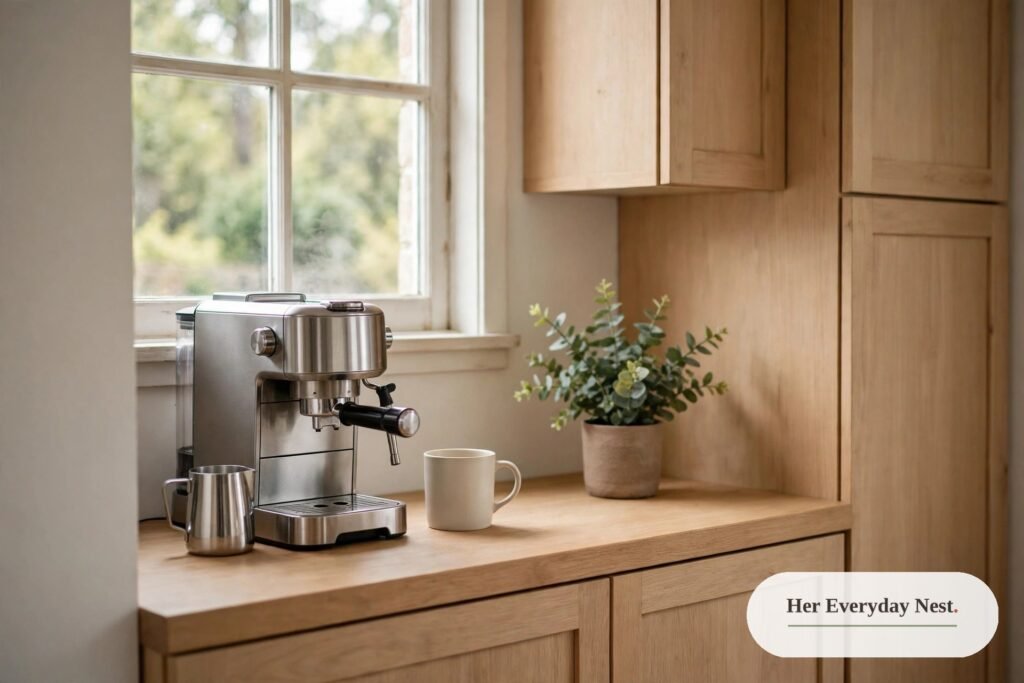
Use a tray to corral the few things that do stay out — a candle, a small plant, the coffee setup — so they look intentional instead of scattered. Then build a two-minute nightly reset: put everything back where it belongs before bed, and mornings start calm instead of chaotic.
9. Utilize Under-Bed Storage
Under the bed is prime real estate in a small house. Flat bins or vacuum-sealed bags hold seasonal clothes, extra bedding, and luggage without taking a single inch of closet space. A bed frame with built-in drawers does the same job even better, if you are buying new.
Label every under-bed bin, and keep a simple list on your phone of what is where. Hidden storage only works when you can find things again without pulling out every bin.
10. Implement the One-In, One-Out Rule
Small houses stay organized when what comes in equals what goes out. Buy a new sweater? Donate an old one. Bring home a new kitchen gadget? Retire one you never use. The rule sounds strict, but it is actually freeing — it makes you pause before buying, and it keeps closets and shelves at a steady size.
Keep a donation bag in the closet at all times. When it fills up, drop it off. Small, steady outflows beat one exhausting annual purge every time.
11. Create a Command Center
A command center is one wall or board that holds the life-admin of the household: calendar, to-do list, important contacts, keys, mail, and school or work papers. Without it, those papers spread across every surface in the house.

You do not need a big setup — a bulletin board, a few hooks, a small basket for mail, and a calendar are enough. The point is that there is exactly one place to check, so nothing important gets lost in a pile.
12. Maximize Kitchen Storage
Kitchens in small houses work hardest, so they deserve the most clever storage. Pull-out shelves inside deep cabinets, organizers for lids and baking sheets, wall-mounted racks for pots and pans, and a lazy Susan in a corner cabinet can double usable space without any renovation.
Store by frequency: daily items at eye level and within reach, weekly items a little higher, and holiday or specialty items up top. When the kitchen works, the whole house feels easier — because the kitchen is where small-house clutter shows up first.

Small House Organization Tips That Stick
The best system is the one you will actually maintain, so start small: declutter one area, add one set of hooks, set up one zone. Then protect it with two habits — the nightly two-minute reset, and the one-in, one-out rule. Together they keep a small house organized without constant effort.
For more ideas, The Spruce and Good Housekeeping both publish practical small-space guides worth browsing. But the real secret is simpler than any product: give everything a home, keep only what you use, and let your small house stay the cozy, calm place it was meant to be.
Frequently Asked Questions
What is the best way to organize a small house?
Start by decluttering, then give every item a designated home using vertical storage, clear bins, and zones. A small house stays organized when the system is easy to put things back into, not just easy to set up.
How do I organize a small house with no storage?
Use walls, doors, and under-bed space: shelves, hooks, over-door racks, and flat under-bed bins create storage without taking floor space. Multi-functional furniture like storage ottomans and sofa beds adds hidden storage too.
How often should I declutter a small house?
A quick declutter every few months works well, or one drawer or shelf a week if you prefer small steps. Regular small declutters prevent the big, overwhelming pileups that make small houses feel cramped.
What is the one-in, one-out rule?
For every new item you bring home, remove one similar item. It keeps closets, shelves, and drawers at a steady size and makes you think twice before buying things you do not truly need.
How can I make a small house look bigger?
Keep surfaces clear, use light colors and mirrors, store things vertically, and choose furniture that does double duty. A tidy, uncluttered room always reads larger than the same room filled with visible stuff.

Emily Carter is the founder and editor of Her Everyday Nest. After nine years of renting in five apartments across three cities, she's learned how to make any rental feel like home.