

13 Top Budget-Friendly Organization Tips for a Clutter-Free Home

A tidy home does not require a big budget or a full weekend of work. Most of the mess we live with comes from a handful of small habits — things without a home, papers piling up on the counter, and closets that quietly overflow. The good news is that these budget friendly organization tips fix exactly those problems, and almost all of them cost less than a takeout dinner. You do not need matching designer bins or a professional organizer. You need a plan, a few cheap supplies, and about fifteen minutes a day. Here are thirteen simple ideas that work in real homes, room by room, without spending a fortune.
1. Start by Decluttering, Not by Shopping
It is tempting to buy bins first, but containers only help once you know what you actually own. Pick one small area — a single drawer, one shelf, or the entryway table — and pull everything out. Sort it into three piles: keep, donate, and toss. Be honest about the things you have not touched in a year. If you are stuck, set a timer for fifteen minutes; a short deadline makes decisions much easier. Once the extras are gone, what is left is far easier to organize, and you will probably find you need fewer supplies than you expected.
2. Use Baskets and Bins for Every Category
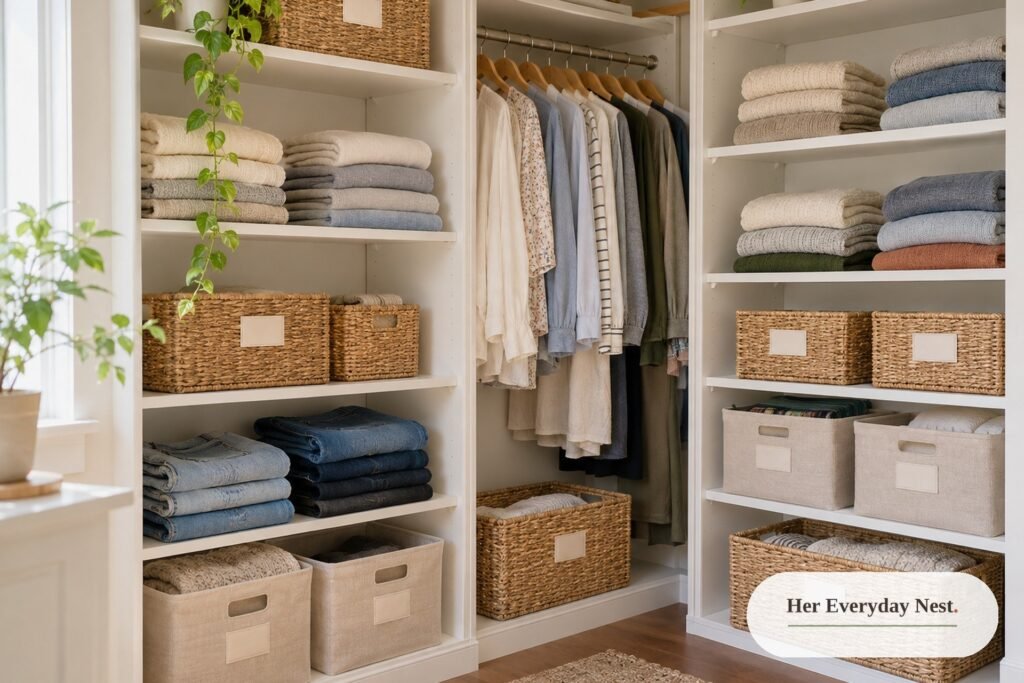
Baskets and bins are the simplest way to give a group of items one home. Instead of loose chargers, scarves, or toys scattered across a room, each category gets its own container. Dollar stores and discount aisles carry sturdy options for a few dollars each, and a woven basket instantly makes open shelving look intentional. Keep one bin per category rather than one giant catch-all, and place bins where the items are actually used — bathroom bins in the bathroom, not in a hall closet.
3. Repurpose Containers You Already Own
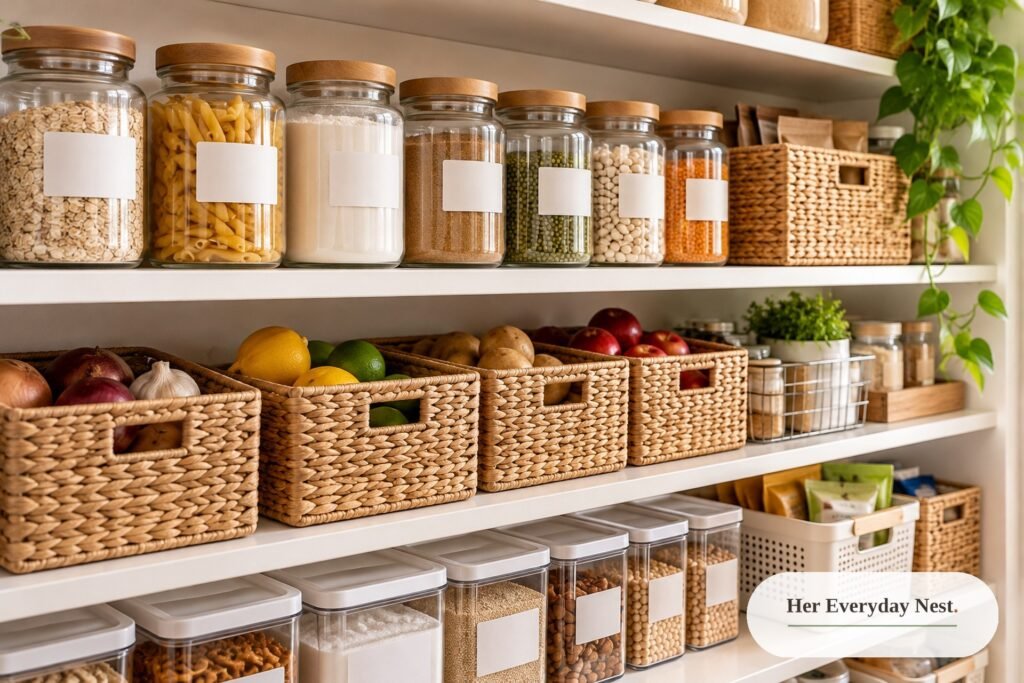
Before buying anything, look around your kitchen. Glass jars hold buttons, rubber bands, spices, and craft supplies beautifully. Shoe boxes, once wrapped in pretty paper, become drawer organizers or paper trays. Even a chipped mug can corral pens on a desk. Reusing what you have costs nothing, keeps useful items out of the trash, and often looks more charming than a row of identical store-bought boxes. The trick is to clean them well and give each one a clear job.
4. Create a Command Center
A command center is one spot where the whole household’s paper life lives: school forms, bills, keys, and the weekly calendar. Choose a wall near the kitchen or front door, then add a small bulletin board, a few hooks, and a basket or tray for incoming mail. When everyone knows where papers go, the kitchen counter stops being a filing cabinet. Check the basket once a week, file or recycle what is inside, and the pile never gets scary again.

5. Make Your Own Drawer Dividers
Messy drawers usually just need boundaries. Measure the inside of a drawer, then cut cardboard, foam board, or even cereal boxes to size. Arrange the pieces into sections for each type of item — utensils in the kitchen, socks in the bedroom, chargers in the office drawer. Custom dividers cost almost nothing, fit oddly shaped drawers better than store-bought inserts, and can be remade in minutes when your needs change.
6. Label Everything You Store
Labels are what turn a bin from a mystery box into a system anyone can follow. This matters most in shared spaces, where family members or roommates need to know where things belong. You do not need a fancy label maker: masking tape and a thick marker work perfectly, and printed labels from a home computer look tidy on pantry shelves. Label the outside of every bin, shelf, and drawer, then make returning things to their spot part of the routine.
7. Use Your Vertical Space
When floor space runs out, look up. A few floating shelves turn a blank wall into storage for books, plants, or bathroom supplies. Hooks inside cabinet doors hold measuring cups, and a pegboard in a craft room or garage keeps tools visible and within reach. Going vertical keeps everyday items off counters and floors, which makes rooms feel bigger even when nothing has left the house. Start with one wall and one row of hooks — the difference is immediate.
8. Keep a Ten-Minute Daily Reset
Big cleanouts fail because they are exhausting; small daily resets succeed because they are easy. Spend ten to fifteen minutes each evening putting stray items back where they belong: dishes to the kitchen, shoes to the rack, papers to the command center. If everyone in the house pitches in, the whole reset takes even less time. Done daily, this habit stops clutter from rebuilding, so your weekends stay free for things you actually enjoy.
9. Set Up a Simple Filing System
Paper clutter is mostly a sorting problem. Grab an accordion folder or a small file box and create sections for the categories you actually have — bills, medical records, warranties, and school papers are a good start. Label each section clearly, then file new papers the day they arrive instead of stacking them “for later.” Once a year, pull the folder out and shred anything outdated. A system this simple takes an afternoon to set up and saves hours of searching later.
10. Switch to Clear Containers Where It Counts
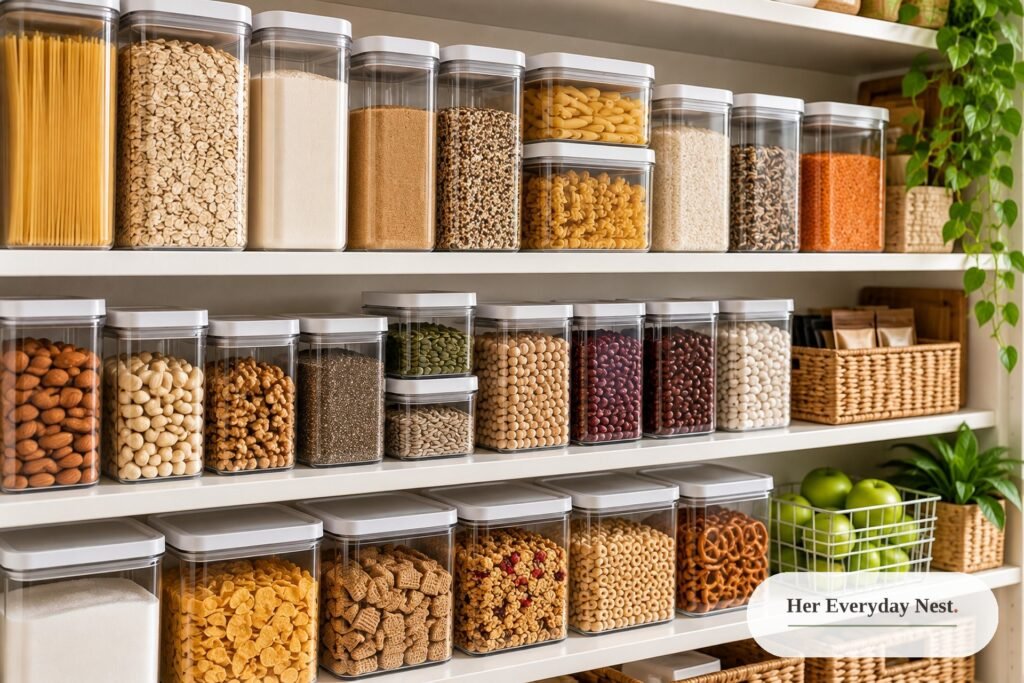
Clear containers let you see what you have at a glance, which means fewer duplicate purchases and less digging. They shine in the pantry, the fridge, and craft storage, where knowing the contents matters. You do not need to decant everything — just the items you buy in bulk or use often, like rice, flour, or beads. Label the front anyway, since flour and powdered sugar look identical, and keep the containers to one or two sizes so they stack neatly.
11. Hang Organizers Over Doors
The back of a door is free storage space most homes ignore. A hanging shoe organizer holds far more than shoes — try it for cleaning supplies on a pantry door, accessories in a bedroom, or small toys in a playroom. Installation takes minutes and needs no tools or holes in the wall, which makes this a renter-friendly favorite. Choose clear pockets when you want to see everything, or fabric pockets when you prefer a tidier look.
12. Rotate Things Seasonally
A rotating system keeps storage honest. In the pantry, place newer items behind older ones so nothing expires unnoticed. In the closet, move off-season clothes to the back — or out of the way entirely — and bring current-season pieces forward. A quick seasonal rotation every few months also doubles as a mini-declutter: if you did not reach for something all season, it is a strong candidate for donation. This habit keeps every shelf relevant to the life you are living right now.
13. Claim the Space Under Your Bed
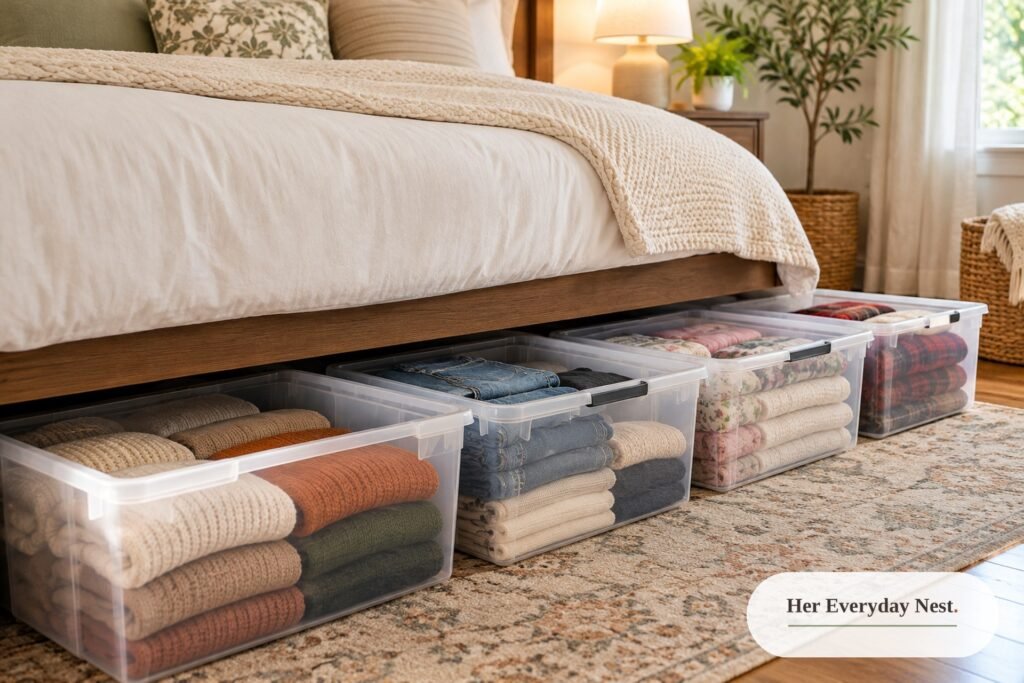
Under-bed storage turns wasted space into a home for off-season clothes, extra bedding, and shoes. Low, flat bins slide easily under most bed frames, and wheeled versions are even easier to pull out. Label each bin so you are not dragging out three boxes to find the winter sweaters. This trick is especially valuable in small bedrooms, where closet space is tight and every square foot has to earn its keep.
Where to Start If You Feel Overwhelmed
If thirteen ideas feel like a lot, start with just three: declutter one drawer today, set up a command center this weekend, and begin the ten-minute nightly reset tonight. Those three habits alone will change how your home feels within a week. Add baskets, labels, and vertical storage one room at a time, and remember that an organized home is not a perfect home — it is simply one where everything has a place and you can find it. For more low-cost home ideas, see our budget-friendly beach vacations guide and our boho bedroom decor ideas for a calm, collected look. And if a party is on the calendar, our bluey birthday cake ideas are an easy win. When decluttering leaves you with bags to give away, donating them keeps good items in use, and anything broken or worn out can be recycled responsibly — the EPA’s recycling guide explains what goes where.
You do not need to spend a lot to create a beautifully organized home. With a little creativity, a few dollar-store finds, and habits that take minutes instead of hours, any space can become calmer and easier to live in. Pick your first tip, set a timer, and enjoy the small victory of one tidy drawer — the rest tends to follow.
How can I organize my home on a really tight budget?
Start with decluttering, which costs nothing, then use dollar-store baskets, repurposed jars, and DIY dividers. The most effective budget friendly organization tips rely on habits — a daily reset and a command center — rather than expensive products.
What is the first step to organizing a messy house?
Pick one small area, like a single drawer or shelf, and sort everything into keep, donate, and toss piles. Small wins build momentum, and one tidy spot makes the next one feel doable.
How do I keep my home organized long-term?
Give every item a labeled home, do a ten-minute reset each evening, and rotate seasonal items a few times a year. Systems fail when returning things takes effort, so keep the system simple.
Are clear containers better than baskets for storage?
Clear containers win where seeing contents matters, like pantries and craft supplies, while baskets look better on open shelving and in living areas. Many homes use both — clear bins inside closets, baskets where guests can see them.
What should I do with items I declutter?
Donate anything usable to a local charity, recycle broken items responsibly, and toss only what is truly worn out. Bag donations as you go so they leave the house instead of moving to another closet.

Emily Carter is the founder and editor of Her Everyday Nest. After nine years of renting in five apartments across three cities, she's learned how to make any rental feel like home.