One-Pot Dinners That Save You From Washing Up
One pot dinners are the closest thing weeknight cooking has to a cheat code. Everything — the protein, the vegetables, the pasta or rice, and the sauce — cooks together in a single pot, so dinner builds its own flavour as it simmers and the only thing left to wash is that one pot. No separate pan for the sauce, no colander for the pasta, no second dish for the vegetables. The appeal is not just fewer dishes, although that alone is worth it on a busy night. Because everything shares one pot, the pasta absorbs the broth instead of plain water, the vegetables soften into the sauce, and the whole meal tastes like it cooked far longer than it did. These 15 one pot dinners cover pasta, soups, chilis, and skillet meals, and they all follow the same simple rules — rules that stop the sticking, the mush, and the watery sauce that give one-pot cooking a bad name.
1. What Counts as a One-Pot Dinner (and What Does Not)

A true one pot dinner cooks the whole meal in one vessel from start to finish. You brown the meat in the pot, add the vegetables to the same pot, pour in the liquid and the pasta or rice, and finish in that same pot. Nothing is drained into a colander, nothing is transferred to a baking dish, and no second pan appears halfway through. If a recipe asks you to cook the pasta separately and stir it in at the end, it is a one-pan sauce, not a one-pot dinner — still delicious, but not the same promise. One-pot, one-pan, and Dutch oven are related but different. One-pot usually means a deep pot or Dutch oven on the stove, where liquid simmers and pasta or rice cooks in it. One-pan usually means a wide skillet, where food fries and sauces reduce quickly. A Dutch oven is simply the best tool for one-pot cooking: heavy, even heat, a tight lid, and it goes from stove to table without complaint. You do not need one to start — any large, deep pot with a lid works — but if you cook one-pot meals often, it is the single purchase that improves all of them. The payoff is real. One pot dinners save time twice: once while cooking, because there is nothing to juggle, and once afterwards, because there is one pot to wash instead of four. They also save money, because they are built from pantry staples — pasta, rice, canned tomatoes, beans, broth — and stretch a small amount of meat across a full family meal. That is why they show up in almost every budget cooking collection: one pot is the cheapest way to feed a crowd well.
2. The 15 Ideas: Pasta, Soups, Chilis, and Skillets

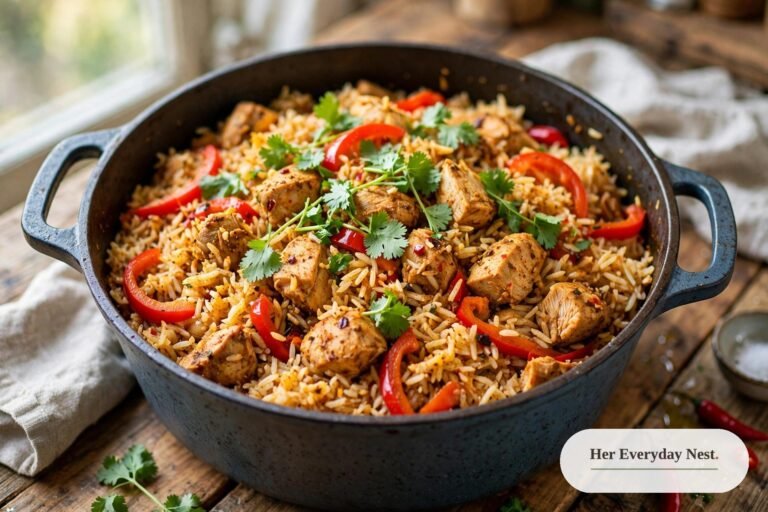
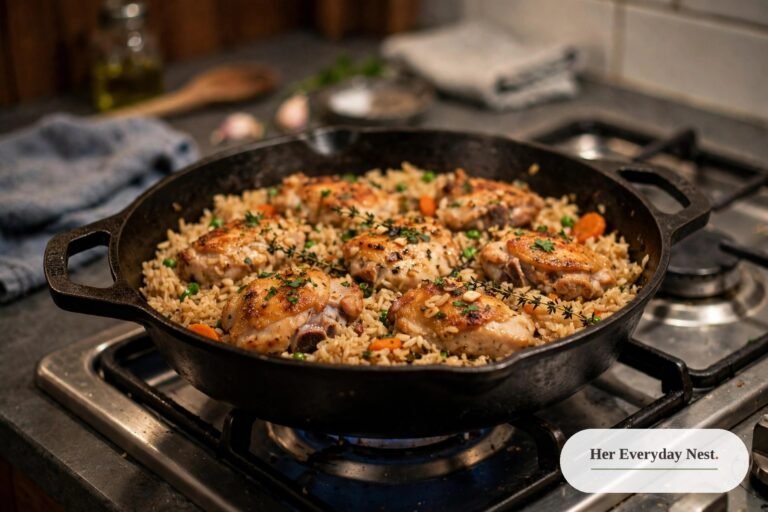
Start with one-pot pasta, the category that made the method famous. (1) Creamy tomato pasta: pasta, canned tomatoes, broth, garlic, and spinach simmered together, finished with cream cheese and Parmesan. (2) Taco pasta: ground beef, taco seasoning, tomatoes, pasta shells, and broth, topped with cheddar. (3) Veggie pasta: whatever vegetables are in the fridge, rotini, broth, and pasta sauce, finished with cheese. (4) Creamy mushroom pasta: mushrooms browned first, then fettuccine and broth, finished with cream. (5) Pesto chicken pasta: chicken, pesto, pasta, and broth, with spinach stirred in at the end. Soups and chilis are the most forgiving one pot dinners of all. (6) Classic chili: ground beef, beans, tomatoes, and spices simmered for as long as you have — thirty minutes is fine, an hour is better. (7) White chicken chili: chicken, white beans, green chiles, and broth, creamy without cream. (8) Potato corn chowder: potatoes, corn, and broth blended just enough to thicken, finished with cheese. (9) Vegetable soup with beans and herbs: the fridge-clearing dinner that works with almost any vegetable. (10) Chicken and rice soup: the comfort classic, cooked in one pot from raw chicken to finished soup. Skillet and Dutch oven meals round out the list. (11) Chicken and rice: seasoned chicken browned, then rice and broth added to the same pot until fluffy. (12) Beef stroganoff: ground beef, mushrooms, egg noodles, and broth, finished with sour cream off the heat. (13) Sausage and kale casserole: sausage, kale, mushrooms, and orzo in a creamy sauce. (14) Cheesy skillet ravioli: frozen ravioli, tomato sauce, and cheese baked in the same skillet. (15) Greek chicken and orzo: chicken, orzo, tomatoes, and spinach with lemon and feta. Fifteen dinners, one pot each, and a different one for every mood the week throws at you.
3. The Liquid Rules: Why One-Pot Pasta Sticks (and How to Stop It)

The most common one-pot failure is pasta that sticks to the bottom or turns to mush, and both problems come from the same cause: the liquid. One-pot pasta does not need to swim. It needs just enough broth to cook the pasta and leave a thick, saucy coating — usually about 2 cups of liquid per 8 ounces of pasta, plus the liquid from canned tomatoes. Too much liquid gives you soup; too little gives you a stuck, half-cooked mess. Start with the lower amount and add splashes as needed, because you can always add liquid but you cannot take it back. Stirring matters more in one-pot cooking than in any other kind. Stir when the liquid first boils, to separate the pasta. Stir every few minutes while it simmers, scraping the bottom, and always replace the lid quickly so the heat stays in. If the pasta is cooked but the pot still looks watery, simmer uncovered for the last few minutes so the sauce thickens. If the pasta is still firm but the pot is dry, add a splash of broth and keep the lid on. Different pasta shapes need slightly different amounts — short shapes like penne and rotini are the most forgiving, while long shapes like fettuccine need breaking in half and a little more attention. Two more rules complete the set. First, brown the meat and soften the onions before adding liquid: those browned bits on the bottom of the pot dissolve into the sauce and are where most of the flavour comes from. Second, add dairy and cheese at the end, off the heat or on low heat, so sauces stay smooth instead of splitting. Follow the liquid rules, stir on schedule, and finish the dairy last, and one-pot pasta stops being a gamble and becomes the most reliable dinner in your rotation.
4. The Right Pot, the Right Heat, and the Lid Question

Pot choice decides more one-pot dinners than recipes do. A pot that is too small boils over and cooks unevenly; a pot that is too big lets liquid evaporate too fast and leaves pasta undercooked. For a family dinner, a 5- to 6-quart Dutch oven or deep pot is the sweet spot: room for pasta to move, depth to hold liquid, and a lid that actually seals. A wide, shallow skillet works better for one-pan pasta, where evaporation is part of the plan, but for soups, chilis, and rice dishes, depth wins. Heat control is the second half of the equation. Bring the pot to a full boil with the lid on, give it one good stir, then turn the heat down to a gentle simmer and keep the lid on, lifting it only to stir. A rolling boil breaks pasta, scorches the bottom, and evaporates the liquid you measured so carefully. A gentle simmer — small bubbles, steady steam — cooks everything evenly and leaves a sauce, not a puddle. If your stove runs hot, a heat diffuser or the smallest burner helps, and an oven-safe Dutch oven can finish in a low oven instead, where the heat is even all around. The lid question has a simple answer: lid on while cooking, lid off only to thicken at the end. Lid on keeps the liquid in and the temperature even. Lid off lets steam escape and sauce reduce. Recipes that say “simmer uncovered” for the whole cook are usually written for a wide pan, not a deep pot, and following them in a deep pot dries the meal out. Trust the lid, stir on schedule, and only lift it at the end when you want the sauce thicker.
5. Scaling, Storing, and Eating It Twice

One pot dinners scale beautifully — until they do not. Doubling a recipe in the same pot works if the pot is big enough for the food to move; doubling it in a pot that is already full gives you uneven cooking and a boil-over. The rule is simple: the pot should never be more than three-quarters full once the liquid goes in. If doubling breaks that rule, cook in two batches or use a bigger pot. Pasta dishes are the hardest to scale, because pasta absorbs liquid as it sits, so a doubled pasta dish often needs extra broth stirred in when serving. Storage is where one pot dinners really pay off. Cool the pot quickly by dividing leftovers into shallow containers, refrigerate within 2 hours, and eat within 3-4 days. Reheat soups and chilis to a rolling boil, and reheat pasta dishes with a splash of broth or water, stirring, until steaming hot throughout (165°F for leftovers). Most one-pot meals freeze well for 2-3 months — soups and chilis best of all, pasta dishes acceptably if slightly softer after thawing. Label containers with the date, because a freezer full of mystery tubs helps no one. The smartest one-pot habit is to cook deliberately for two nights. Make a double batch of chili on Sunday, eat half, and freeze half for a night later in the week when cooking feels impossible. That is not leftovers as an afterthought; it is meal planning with one pot doing the work of two dinners. See Air Fryer Dinners With Only 3 Ingredients, which uses the same cook-once logic with even less washing up.
6. Cleanup: The Part That Makes It Worth It

The cleanup promise is the whole point of one pot dinners, so protect it. Soak the pot while you eat — hot water and a drop of dish soap in the pot on the counter, not in the sink full of other dishes. By the time dinner is over, anything stuck has loosened, and one pot washes in two minutes instead of ten. For a Dutch oven, skip the dishwasher and wash by hand with hot water; enamel does not need scrubbing, and cast iron should never soak for long or go in the dishwasher at all. A few habits keep the one-pot promise honest. Serve from the pot at the table instead of transferring food to a serving dish — that is one more dish you never create. Put toppings in the small bowls they came in, or straight from their containers, rather than decanting them into new ones. And resist the side dishes: a one-pot dinner is already a complete meal with protein, vegetables, and grains in it, so bread or a simple salad is all it needs, not a second cooked side with its own pan. The meal is complete, the table is full, and the sink holds one pot. That is the real reason one pot dinners stick around long after the novelty fades. They are not just easier to cook; they are easier to live with. One pot, one meal, one quick wash, and the evening is yours again.
Frequently Asked Questions About One Pot Dinners
What is a one-pot dinner?
A one-pot dinner is a complete meal — protein, vegetables, and pasta, rice, or grains — cooked from start to finish in a single pot or Dutch oven, with nothing drained separately and no second pan.
Do you need a Dutch oven for one pot dinners?
No, any large deep pot with a tight-fitting lid works. A Dutch oven is the best tool because of its even heat and tight lid, but it is not required to start cooking one-pot meals.
Why does one-pot pasta stick to the pot?
One-pot pasta sticks when there is too little liquid, when it is not stirred during simmering, or when the heat is too high. Use about 2 cups of liquid per 8 ounces of pasta, stir every few minutes scraping the bottom, and keep the heat at a gentle simmer with the lid on.
Can you freeze one-pot dinners?
Yes. Soups and chilis freeze best, for 2-3 months, while pasta dishes freeze acceptably but soften slightly after thawing. Cool quickly, store in shallow containers, label with the date, and reheat until steaming hot throughout.
How long do one-pot leftovers last in the fridge?
One-pot leftovers last 3-4 days in the refrigerator when stored in shallow containers and refrigerated within 2 hours of cooking. Reheat leftovers to 165°F, and reheat pasta dishes with a splash of broth to restore the sauce.
The Bottom Line
One pot dinners earn their place in a weeknight rotation the honest way: they taste like they took longer than they did, they cost less than takeout, and they leave one pot in the sink instead of a mountain of dishes. Remember the liquid rules, stir on schedule, keep the lid on until the end, and serve from the pot. Then pick any of these fifteen ideas, cook it in the biggest pot you own, and enjoy the rare weeknight feeling of a home-cooked dinner with almost nothing to clean up. For more seasonal ideas, see 25 Easy Thanksgiving Side Dishes Everyone Will Love and 25 Easy Christmas Cookies Everyone Will Love.

Emily Carter is the founder and editor of Her Everyday Nest. After nine years of renting in five apartments across three cities, she's learned how to make any rental feel like home.