
Tortoiseshell Nails — The Fall Design Salons Cannot Stop Doing
Tortoiseshell nails are the rare fall manicure that looks expensive without trying to be loud about it. The pattern is warm, glassy, and a little bit wild — amber, caramel, chocolate, and black melted together in soft, uneven patches, like light shining through a piece of polished stone. Salons cannot stop doing it because it works on almost everyone: it reads as a neutral from a distance, but up close it has all the depth of real nail art.
The best part is that tortoiseshell nails are far more forgiving than they look. The pattern is supposed to be irregular, so a slightly uneven patch is not a mistake — it is the whole point. This guide explains exactly what the look is, how to do it yourself at home, which shapes and colours pair with it best, how long it lasts, and when it is worth paying a salon instead.
1. What Tortoiseshell Nails Actually Are
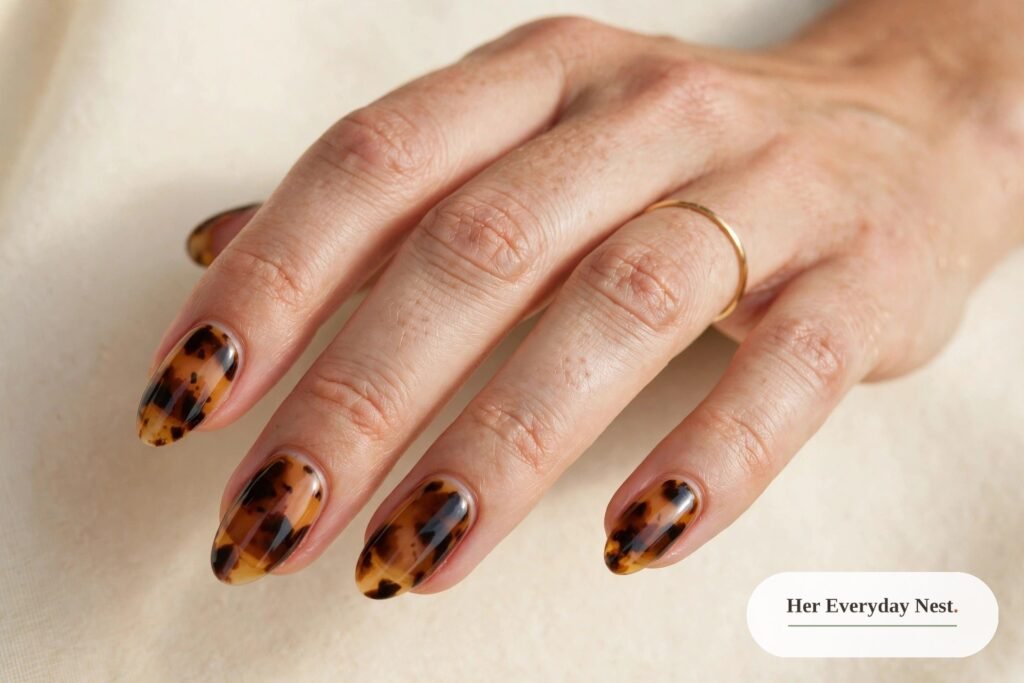
Tortoiseshell nails take their name from the mottled shell pattern, but no real shell is involved — the effect is pure polish. The look is built from translucent layers: a sheer amber or honey jelly base, then irregular patches of caramel, chocolate brown, and black floated over it, finished with a high-gloss topcoat. The translucency is what makes it work. Opaque brown spots would look like leopard print; sheer layers stacked on top of each other create depth, so the nail looks like it has something glowing inside it.
That depth is also why the design photographs so well and why it keeps coming back every autumn. The warm palette — amber, caramel, chocolate, black — is the exact palette of fall itself: fallen leaves, leather boots, wool coats, and hot coffee. It flatters most skin tones because it contains both warm and dark notes, and it behaves like a neutral in an outfit while still counting as nail art. If you have ever wanted a manicure that goes with everything in your closet but is not just another solid colour, this is the one.
A classic full set puts the pattern on every nail, but the most popular salon version is more restrained: tortoiseshell nails on one or two accent nails per hand, with the rest painted in a solid colour pulled from the pattern. That accent approach is the easiest entry point if you are trying the trend for the first time.
2. How to Do Tortoiseshell Nails at Home: Layer While Tacky, Soften the Edges

You can absolutely do tortoiseshell nails at home, and the technique is simpler than the salon result suggests. You need a base coat, a sheer amber or honey jelly polish, caramel and chocolate brown polishes, a black polish, a thin nail art brush or a toothpick, and a glossy topcoat. Jelly polishes are the key purchase: a regular opaque amber will not give you the see-through depth that makes the pattern look real.
Start with a base coat, then apply one or two coats of the sheer amber jelly and let it go tacky, not fully dry. This is the most important step. Working while the base is still tacky lets each new patch melt slightly into the layer below instead of sitting on top of it like a sticker. Using the thin brush, float on irregular blobs of caramel, then smaller blobs of chocolate brown, then just a few small touches of black. Do not paint shapes — dab, dot, and drag lightly, leaving amber showing between the patches. While everything is still tacky, take a clean brush or a sponge and gently soften the edges of the darkest patches so they blur into the amber instead of ending in a hard line. That softened edge is what separates a convincing tortoiseshell manicure from a spotted one.
The common mistakes are all fixable once you know them. Too much black is the biggest one: black should be the smallest colour in the mix, or the nail turns muddy. Fully dry layers are the second mistake, because patches painted onto a dry base look flat and separate. And skipping the glossy topcoat is the third — without it, the glass-like finish that defines tortoiseshell nails never appears. Seal with two thin coats of glossy topcoat, and clean up the edges with a flat brush dipped in remover. If one nail goes wrong, wipe it and redo just that nail; because every nail is meant to be different, nobody will ever know.
3. The Shape Guide: Almond, Square, and Short Nails

The almond shape is the classic pairing for tortoiseshell nails, and for good reason. The tapered, rounded tip echoes the organic shape of the pattern itself, and the extra length gives the amber and chocolate patches room to spread out and show their depth. On medium to long almond nails, a full tortoiseshell set looks its most luxurious — this is the version you see in most salon photos, and it is the safest choice if you are booking the look for a special occasion.
Square nails give the same pattern a completely different personality: sharper, more modern, and a little bit graphic. The straight edges frame the soft, irregular patches nicely, and a square tortoiseshell manicure pairs beautifully with tailored fall clothes and structured bags. If your nails are naturally strong and you like a clean, polished shape, square is an excellent choice, especially as an accent nail next to solid chocolate nails.
Short nails are where most people hesitate, and they should not. Tortoiseshell nails work beautifully on short nails — arguably better than most nail art, because the pattern does not need length to read clearly. On short nails, keep the patches smaller and leave a little more amber showing, and consider the accent approach: tortoiseshell on the ring finger only, with the rest in espresso or mocha. Short square nails with a tortoiseshell accent look intentional rather than compromised, and the warm pattern draws the eye to the nail instead of its length. Whatever your length, the rule is the same: the shorter the nail, the smaller the patches and the lighter the hand with black.
4. What Colours Go With Tortoiseshell Nails: The Pairing Chart

The easiest way to wear tortoiseshell nails is to pair them with a solid colour pulled straight from the pattern. Solid chocolate brown is the most popular partner: it is rich, it matches the darkest patches, and it makes the tortoiseshell accent nails look even more luminous by contrast. Espresso is a step darker and moodier, ideal for late autumn, while a warm mocha sits between chocolate and nude and softens the whole manicure. If you want the set to feel lighter, a sheer nude or milky pink on the non-accent nails keeps the look daytime-friendly without washing it out.
Two variations deserve their own mention because salons are asked for them constantly. The first is the tortoiseshell French tip: a sheer nude or milky pink base with the tortoiseshell pattern confined to the tip, like a classic French manicure dipped in amber. It is the most wearable version of the trend and the best choice if your workplace is conservative or you simply prefer a lighter nail. The second is the milky pink tortoiseshell version, where the pattern sits over a soft milky pink base instead of amber, giving a dreamier, more romantic take on the same idea. A mocha version — tortoiseshell patches over a milky mocha base with solid mocha nails — splits the difference between the two and is the version to ask for if you love the pattern but find full amber too bold.
For a deeper dive into the solid shades that pair with this pattern, our 15 Chocolate Brown Nail Designs That Look Expensive shows how chocolate nails carry a whole manicure on their own, and 30 Cute Fall Nail Designs has more autumn nail inspiration in the same warm palette. As a rule, keep the rest of the manicure in the same family — browns, caramels, nudes, and mochas — and let one metallic accent, like a gold ring, do the sparkling.
5. Styling Tortoiseshell Nails: Gold Jewellery and Fall Outfits

Tortoiseshell nails were practically made for gold jewellery. The amber and caramel tones pick up the warmth of gold, so a thin gold band, a delicate gold bracelet, or small gold hoops instantly make the manicure look more finished. Silver can work, but it cools the pattern down and fights the warmth that makes it special; if gold is not your metal, try warm bronze or tortoiseshell jewellery itself, like a tortoiseshell hair clip or sunglasses, which echoes the nails without matching them exactly.
For outfits, think of the manicure as a neutral with a point of view. It is stunning with a camel coat, brown leather boots, and cream knitwear — the classic fall uniform — because the nails repeat the outfit’s warm tones at a smaller scale. It also works with burgundy, olive, and charcoal, all of which sit comfortably next to amber and chocolate. If you love deep red nails in autumn, our 15 Burgundy Nail Designs That Look Expensive pairs beautifully with the same wardrobe.
One styling note worth remembering: because the pattern is busy up close, keep the rest of your hands quiet. One or two rings, a simple bracelet, and no competing nail art on the same hand will let the tortoiseshell pattern be the star. The look is already doing a lot of visual work; it does not need help.
6. How Long They Last, What They Cost, and Who Should Skip Them

How long tortoiseshell nails last depends mostly on the formula, not the pattern. A regular-polish version lasts about five to seven days before tip wear shows, which is normal for any regular manicure. A gel version lasts two to three weeks, and gel is the better choice for this design because the layered, glossy finish is exactly what gel does best — and because the pattern hides minor regrowth better than a solid colour does. Press-on tortoiseshell nails are a good middle option, lasting a week or more with careful application, and they are worth considering if you want to test the look before committing to a salon appointment.
Cost follows the same split. A DIY version costs only the polishes, most of which you may already own, plus a thin brush. A salon manicure with tortoiseshell nail art typically costs more than a solid colour because of the extra time and skill, so expect a nail-art surcharge on top of the base price, with gel costing more than regular polish. The accent-nail version is the budget-friendly salon choice: you pay for art on two nails instead of ten, and the result still reads as a full tortoiseshell manicure.
Removal is straightforward but deserves care, especially with gel. Soak gel nails off properly rather than peeling them, which damages the natural nail underneath, and give your nails a few days of cuticle oil and bare rest between gel sets. As for who should skip the trend: if you strongly dislike warm tones, or your everyday style is cool-toned pastels and silver, tortoiseshell nails may fight your wardrobe rather than flatter it. Very short, bitten nails can also struggle, because the pattern needs at least a little nail surface to show its layers — grow them out for a week or two first, or start with a tortoiseshell accent on the longest nail while the rest recover. For everyone else, this is one of the easiest statement manicures to wear all season.
Frequently Asked Questions About Tortoiseshell Nails
What are tortoiseshell nails?
Tortoiseshell nails are a manicure that mimics the mottled tortoiseshell pattern using translucent layers of amber, caramel, chocolate brown, and black polish, finished with a glossy topcoat. The sheer, layered patches create a glass-like depth, and the design can cover all nails or just one or two accent nails.
Can you do tortoiseshell nails at home?
Yes. Use a sheer amber jelly polish as the base, then float on irregular patches of caramel, chocolate, and a little black while the base is still tacky, soften the edges of the darkest patches, and seal with a glossy topcoat. The pattern is meant to be irregular, so imperfect patches actually look more natural.
Do tortoiseshell nails work on short nails?
Yes, tortoiseshell nails work very well on short nails because the pattern does not need length to read clearly. Keep the patches smaller, leave more amber showing, and consider an accent-nail version with solid espresso or mocha nails for the most flattering short-nail result.
What colours go with tortoiseshell nails?
The best partners are colours pulled from the pattern itself: solid chocolate brown, espresso, warm mocha, sheer nude, and milky pink. A tortoiseshell French tip over a nude base and a milky pink tortoiseshell version are the two most popular softer variations.
How long do tortoiseshell nails last?
A regular-polish version lasts about five to seven days, a gel version lasts two to three weeks, and press-on tortoiseshell nails last a week or more with careful application. Gel is the longest-lasting option, and the busy pattern hides minor regrowth better than a solid colour.
The Bottom Line
Tortoiseshell nails earn their fall obsession honestly: they are warm, glassy, forgiving to apply, and flattering on almost every shape and length. Start with an accent nail if you are unsure, keep the black sparing and the topcoat glossy, and pair the pattern with chocolate, mocha, or nude nails and a little gold. Whether you book a salon appointment or try the tacky-layer method at home this weekend, this is one trend that looks just as good in real life as it does in the photos — and that is exactly why salons cannot stop doing it.

Emily Carter is the founder and editor of Her Everyday Nest. After nine years of renting in five apartments across three cities, she's learned how to make any rental feel like home.