Top Backyard Garden Layout Ideas to Transform Your Yard
Good backyard garden layout ideas start with one simple truth: a beautiful yard is not about having more plants, it is about putting the right plants in the right places. When beds, paths, seating, and play areas each have a clear job, even an ordinary yard feels intentional, welcoming, and easy to care for. This guide walks you through practical backyard garden layout ideas for yards of every size, from a tiny city plot to a wide suburban lawn, so you can plan with confidence and transform your yard one zone at a time.
Before you buy a single plant, take a week to simply watch your yard. Notice where the morning sun lands, which corners stay damp after rain, where the wind blows hardest, and which views you love from the kitchen window. A layout that works with sun, soil, and slope will always outperform one that fights them, and it will save you years of moving struggling plants from one spot to another.
Plan Around Sun, Soil, and How You Actually Use the Yard
Every successful garden layout begins with three questions: how much sun does each area get, what is the soil like, and how do you actually want to spend time outside? Vegetables and most flowers need at least six hours of direct sun, while shade-loving plants such as hostas and ferns thrive under trees and on the north side of a house. Sketch your yard on paper, mark the sunny and shady zones, and note wet spots, dry spots, and the path you naturally walk from the back door to the garage or shed.
Soil matters just as much as sunlight. Dig a small hole in a few places and look at what you find: dark, crumbly soil that holds together loosely is ideal, while heavy clay drains slowly and sandy soil dries out fast. You do not need perfect soil everywhere. Raised beds, compost, and mulch can fix most problem areas, and the best backyard garden layout ideas choose plants suited to your conditions rather than fighting them. Finally, be honest about your lifestyle. If you love cooking outdoors, protect space for a grill and table. If children or pets use the lawn, keep a clear play area. A layout built around real life stays beautiful because it gets used.
Divide the Yard Into Zones That Each Do One Job Well
Zoning is the secret behind gardens that look polished rather than random. Instead of scattering beds, pots, and furniture across the whole yard, group activities into zones: an entertaining zone near the house, a growing zone for vegetables and cutting flowers, a quiet corner for reading, and an open lawn or play zone if space allows. Clear zones make a yard feel larger, because each area has a purpose and a boundary, even if that boundary is only a low hedge, a change in paving, or a row of planters.
Place the zones you use most often closest to the house, so a cup of coffee on the patio or a quick herb harvest never feels like a chore. Tuck louder or messier jobs, such as compost bins and tool storage, toward the back or behind a screen of shrubs. Good backyard garden layout ideas connect the zones with a single main path rather than several competing routes, and repeat one or two materials, such as stone and wood, throughout the yard so everything feels like one garden rather than a collection of projects.
Backyard Garden Layout Ideas for Small Yards That Feel Bigger
Small yards reward clever backyard garden layout ideas more than big ones do, because every square foot has to earn its place. Start by keeping the center open: a small lawn, a gravel court, or a simple patio in the middle makes the whole space feel wider, while beds pushed to the edges draw the eye outward. Vertical gardening does the rest. Trellises, wall planters, fences covered in climbers, and tall narrow shrubs add greenery without eating up ground space.
Choose multi-purpose features wherever you can. A bench with storage underneath holds cushions and tools, a raised bed with a wide cap doubles as extra seating, and a small tree gives shade, privacy, and seasonal color in one plant. Keep the plant palette simple in a small yard: fewer varieties, repeated in groups, look calm and generous, while dozens of one-off plants can feel cluttered. For more small-space inspiration, these cozy reading nook ideas for small spaces show how a single quiet corner can completely change how a home feels.

Layer Your Planting Like Nature Does
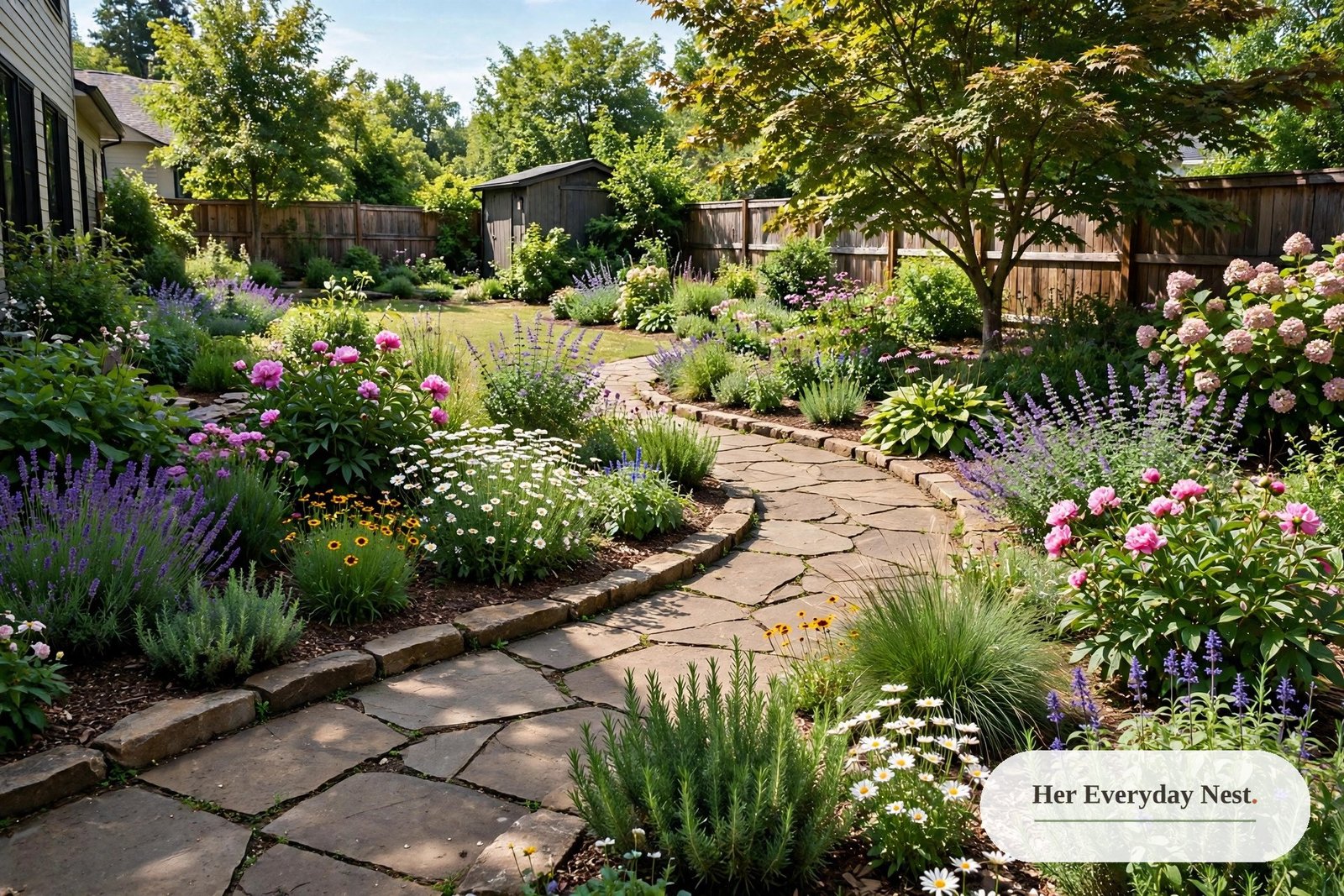
Layered planting is what makes a garden feel lush instead of flat. Think in three tiers: tall trees and large shrubs at the back or overhead, medium shrubs and ornamental grasses in the middle, and low groundcovers, perennials, and annuals at the front. This structure gives birds shelter, shades the soil so it stays moist longer, and creates a rich, finished look in every season.
When you layer, leave room for plants to grow to their mature size. It is tempting to plant closely for instant fullness, but crowded plants compete for light and air and soon need constant pruning. Space according to the plant label, then fill temporary gaps with annuals or pots while perennials settle in. In layered backyard garden layout ideas, repeat key plants along a bed rather than using a different plant every few feet: repetition is the easiest way to make a border look designed, and it makes maintenance simpler because you learn the needs of fewer varieties.
Use Raised Beds for Easier, More Productive Growing
Raised beds are one of the most practical backyard garden layout ideas, especially for vegetables, herbs, and cut flowers. They warm up earlier in spring, drain better than heavy ground soil, and let you fill them with rich, loose compost-based mix. Their height also means less bending, which matters more than most gardeners expect by midsummer. A bed four feet wide lets you reach the center comfortably from either side, and beds eight to twelve feet long give generous growing room without becoming hard to walk around.
Leave at least three feet of path between beds so a wheelbarrow fits, and surface those paths with gravel, mulch, or stepping stones so they stay usable after rain. Orient long beds north to south where possible so plants shade each other less, and put taller crops like tomatoes and beans on the north side so they do not block the sun from shorter plants. If your yard slopes, terrace the beds into level steps: level beds water evenly and look beautifully intentional on a hillside.

Shape the Garden With Curves, Paths, and Borders
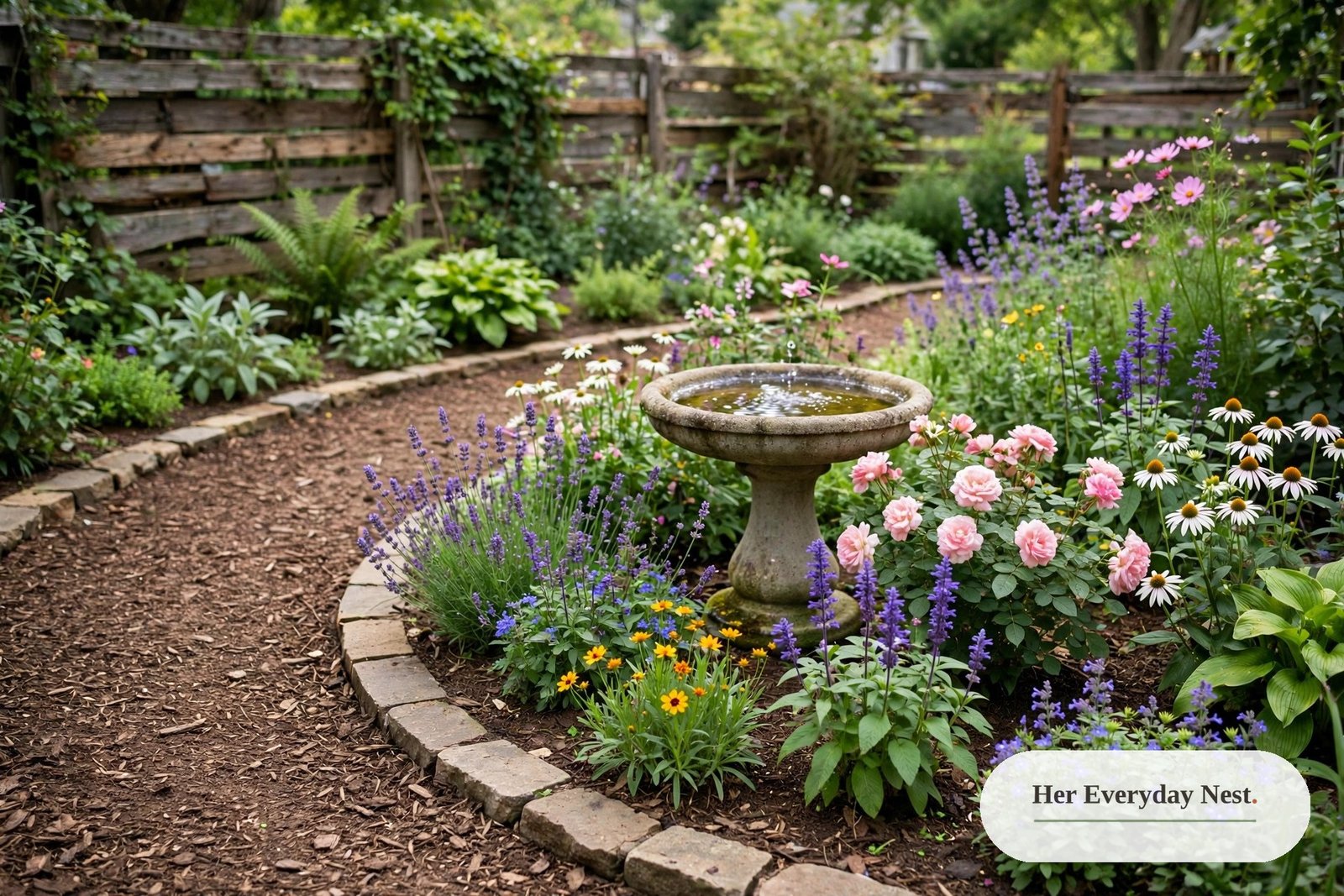
Straight lines are efficient, but gentle curves are what make a garden feel inviting. A curved bed edge softens a rectangular yard, a winding path slows you down and invites exploration, and a rounded lawn shape makes mowing easier than fiddly corners. Use a garden hose laid on the ground to test a curve before you dig: step back, look from an upstairs window if you can, and adjust until the shape feels smooth and natural rather than wobbly.
Paths deserve as much attention as beds. A main path should be wide enough for two people to walk side by side, about four feet, while secondary paths can be narrower. Edge your paths with stone, brick, or metal edging to keep mulch and soil where they belong, and choose a surface that suits your climate: gravel drains well and is budget-friendly, stone feels permanent and elegant, and mulch paths suit informal woodland-style gardens. In the best backyard garden layout ideas, a clear, attractive path is not just practical; it is the thread that ties the whole layout together.
Blend Edible and Ornamental Plants in the Same Beds
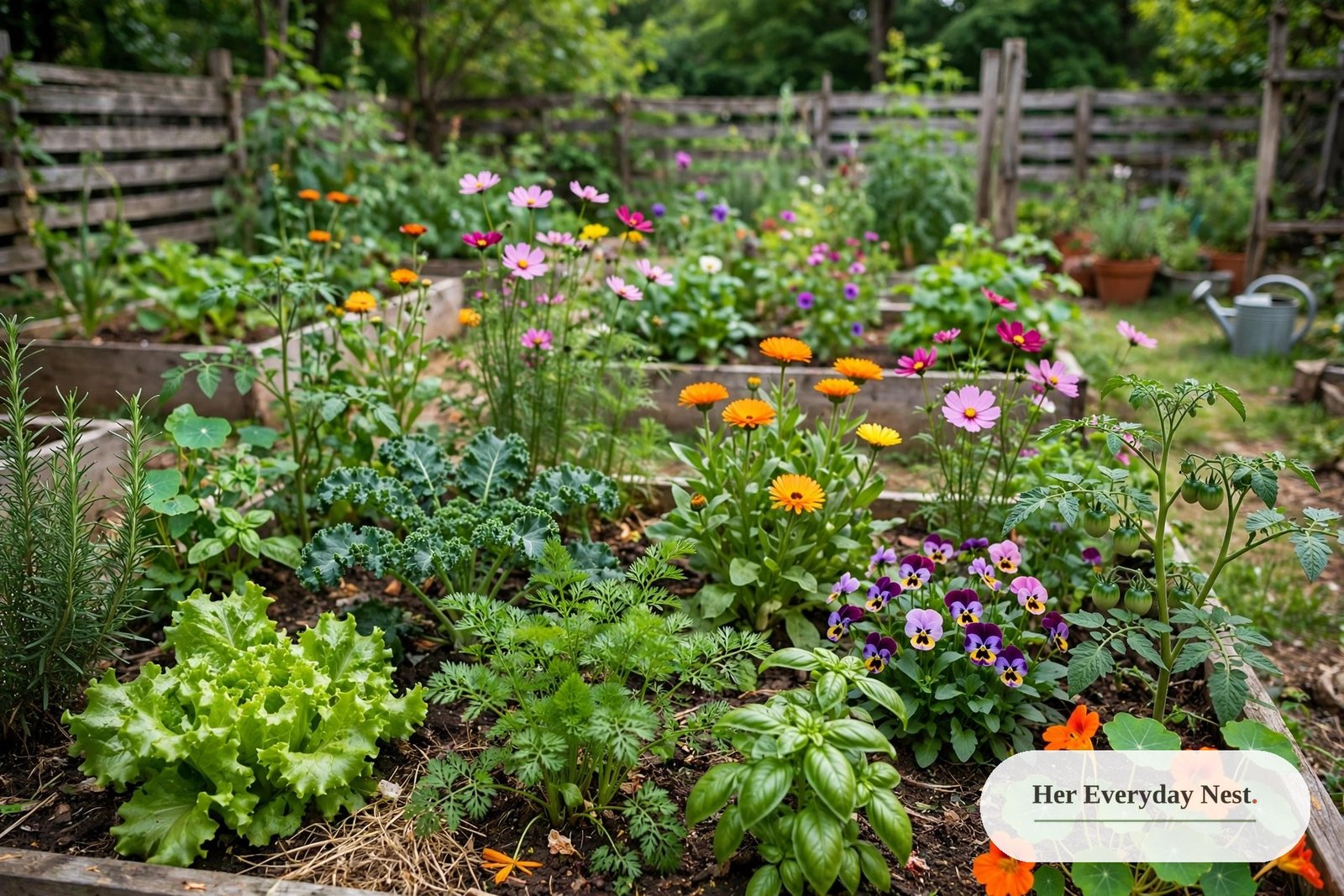
You do not need a separate vegetable patch hidden at the back of the yard. Some of the most charming backyard garden layout ideas mix edibles and ornamentals together, so the garden feeds you and looks beautiful at the same time. Rainbow chard, purple kale, and red lettuce are as decorative as many flowers, while herbs such as rosemary, lavender, and thyme add fragrance, pollinator-friendly blooms, and structure to a border.
Interplanting has practical benefits too. Flowers like marigolds and nasturtiums attract pollinators and beneficial insects, tall flowers can lightly shade lettuce in summer heat, and mixing plant families makes it harder for pests to sweep through a whole crop. Keep edibles you pick daily, such as herbs and salad leaves, near the kitchen door or along the main path, and save the back of the garden for crops you harvest weekly. For broader design guidance, Better Homes & Gardens offers helpful garden layout inspiration at bhg.com garden layout and design ideas.
Design Entertaining and Dining Zones People Actually Use
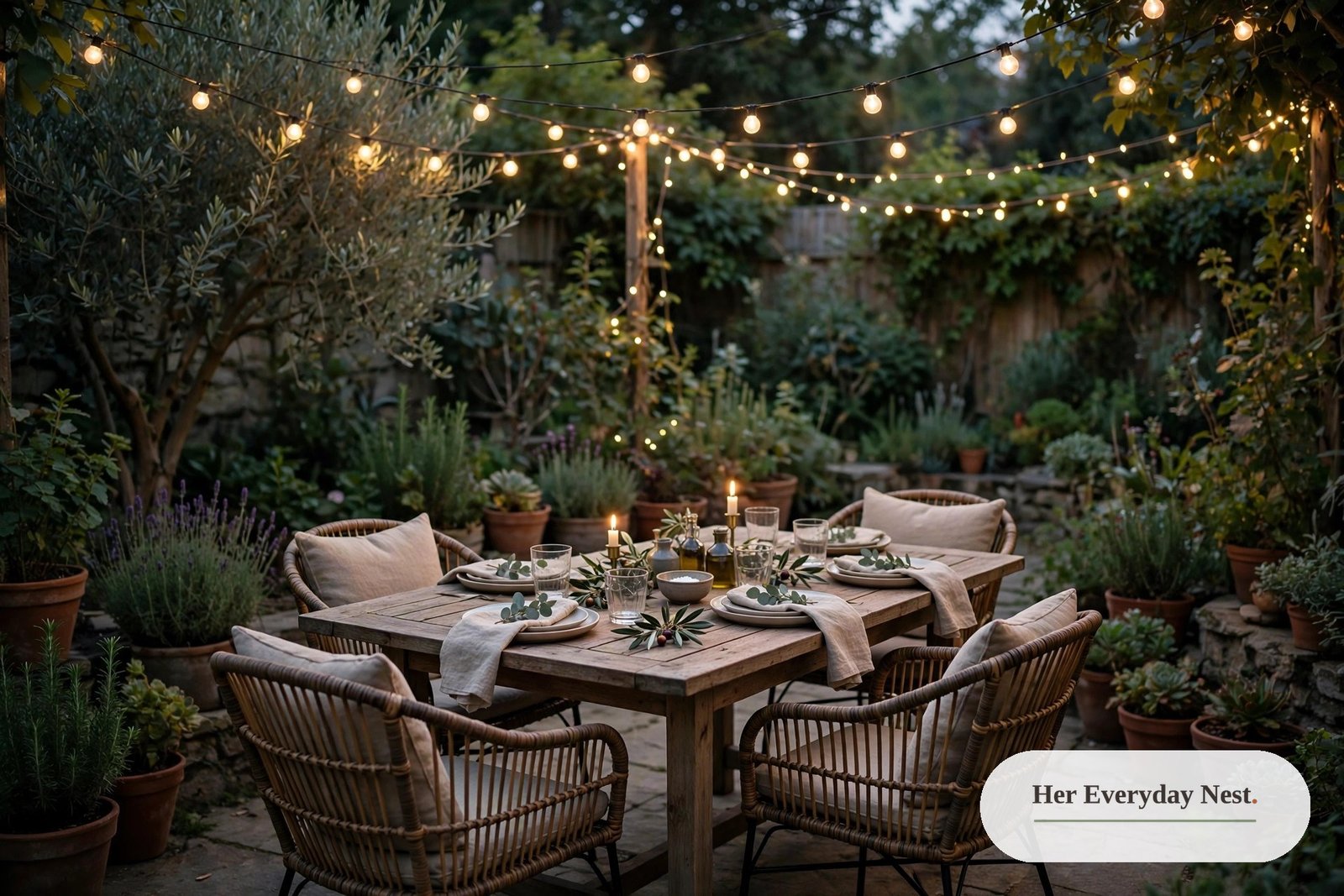
An outdoor dining zone works best when it feels like an extension of the house rather than an afterthought. Site it close to the kitchen for easy carrying of food, give it a level surface, and provide shade: a pergola, a shade sail, or a well-placed tree makes the difference between a table used all summer and one used twice. String lights, lanterns, and a few large pots around the edges make the space feel finished in the evening without any major construction.
Think about seating in layers. A main table suits meals, but a couple of movable chairs or a bench lets people drift toward the sun or the best view. If you have room, add a second, smaller seating spot elsewhere in the garden, perhaps under a tree or beside a flower bed, so the yard offers both social space and a quiet escape. Outdoor rooms also connect beautifully with indoor style: if you love relaxed, natural interiors, these boho balcony decor ideas and Japandi living room ideas share the same calm, nature-led palette that works so well outdoors.
Low-Maintenance Backyard Garden Layout Ideas You Can Keep Up With
The best garden layout is one you can maintain happily, not one that demands every weekend. Low-maintenance design starts with the right plants for your climate and soil, grouped by water needs so you are not overwatering drought-tolerant plants to keep thirsty ones alive. Mulch beds three inches deep to suppress weeds and hold moisture, and choose groundcovers or gravel for areas where grass struggles, such as deep shade or narrow side yards.
Simplify the shape of your lawn if you have one: a simple oval or rectangle is far quicker to mow than a lawn with many fiddly curves and islands. Automate watering with drip irrigation on a timer for beds and pots, and plan one seasonal tidy-up rather than constant fussing. Low-maintenance backyard garden layout ideas also favor a slightly wilder, naturalistic planting style, because it forgives a missed pruning session. The Spruce has a useful overview of garden design basics at thespruce.com garden design basics.
Seasonal Checklist and a Simple Plan to Start This Weekend
A great layout keeps giving through the year when you follow a simple seasonal rhythm. In spring, clean up beds, refresh mulch, and plant warm-season crops after the last frost. In summer, water deeply but less often to encourage deep roots, deadhead flowers to extend blooming, and enjoy the entertaining zones you built. In autumn, plant bulbs and perennials, sow cover crops on empty vegetable beds, and rake leaves onto beds as free mulch. In winter, plan next year’s changes, order seeds, prune dormant trees and shrubs, and protect tender pots from hard frosts.
If all of this feels like a lot, start small this weekend. Sketch your yard, mark sun and shade, and choose just one improvement: a single curved bed, one raised bed, or a clear path to a seating spot. Good backyard garden layout ideas do not require a full renovation in one season. Build the structure first, paths, zones, and beds, then let the planting fill in over time. A garden planned this way grows more beautiful every year, and it becomes the outdoor room you actually live in, not just look at.
Start with the bones, plant in layers, and give every part of your yard a job. Do that, and you will transform your yard into a garden that looks intentional, feels welcoming, and stays easy to love.

Emily Carter is the founder and editor of Her Everyday Nest. After nine years of renting in five apartments across three cities, she's learned how to make any rental feel like home.