15 Renter-Friendly Coffee Bar Ideas for Small Kitchens
A coffee bar is not a luxury reserved for big kitchens. In a rental, it is a small, defined corner where the machine, the mugs, and the coffee live together — so you stop hunting for the filters every morning and the counter stops looking like a yard sale. These renter friendly coffee bar ideas build that corner without a single hole in the wall, a built-in shelf, or a landlord conversation — every solution below is removable, portable, and sized for the 18 inches of counter, the spare cabinet, or the empty wall that most rentals actually have.
The reason most coffee stations fail in small kitchens is not the size of the space. It is that the gear has no assigned home. The machine lives where the chopping board should be, the mugs take over a whole cabinet shelf, and the beans end up on top of the fridge. The order below is deliberate: pick the spot first (near an outlet and a short walk from water), put the machine down, then add only the storage that solves a problem you actually have. That is how a sliver of counter ends up doing the work of a whole cafe corner.
Below are 15 renter friendly coffee bar ideas for small kitchens, each with what it costs, what it suits best, and the renter rule that matters — no drilling, no permanent changes, and everything comes with you when you move. Start with the first three ideas, add pieces only where the station still fails, and let the zones do the rest.
1. Claim an 18-Inch Counter Corner
Eighteen inches is enough for a complete coffee station: one machine, one canister, and one mug. Claim the end of a counter run or a corner — corners are the least useful part of a counter for chopping anyway — and push the machine into it first, because everything else arranges itself around the brewer. Keep the spot away from the stove and the main prep area so you are never reaching around a hot machine to chop an onion.
The corner works because it has firm boundaries: the wall on two sides tells you exactly where the station ends, which stops the mugs and jars from creeping across the whole counter. If you are still choosing a machine for a small space, our best single serve coffee makers roundup covers compact brewers that fit an 18-inch corner without crowding it. Best for every kitchen, and the only setup that costs nothing to start.

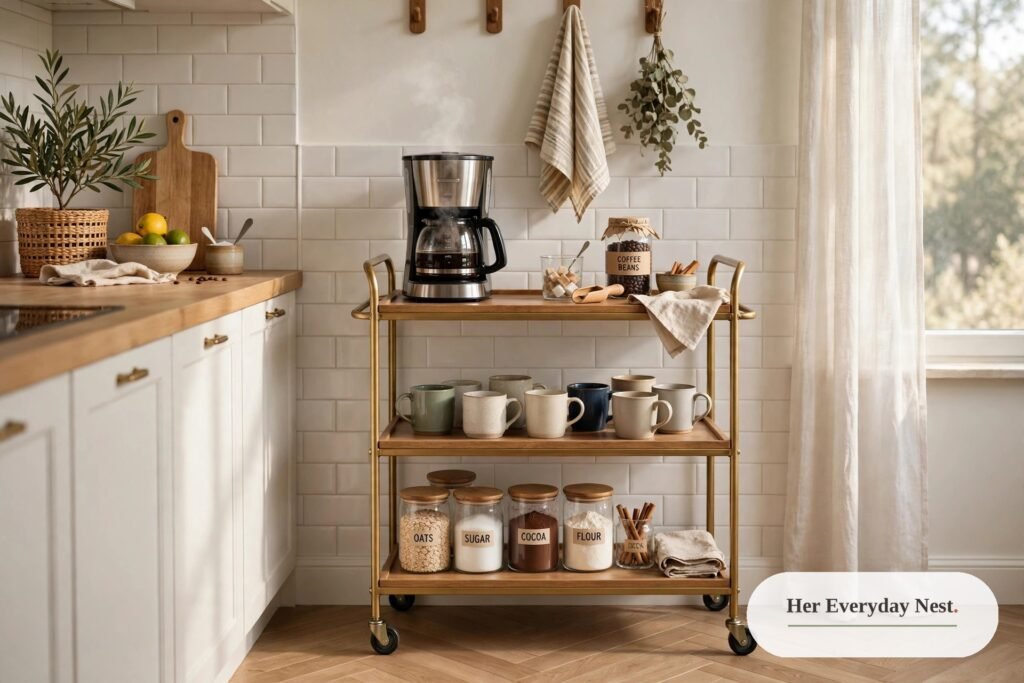
2. Roll In a Bar Cart as a Mobile Coffee Station
No counter to spare? Take the station off the counter entirely. A rolling bar cart parked against any empty wall holds the whole setup as one movable piece: machine on top, mugs and coffee on the middle tier, backup supplies in baskets on the bottom. Choose a cart with at least two shelves and a solid, stable top, and expect roughly $40 to $100 for a sturdy one.
The cart wins because it moves with you — roll it out of the way when the kitchen needs to breathe, roll it beside the sofa on a slow weekend morning, and roll it straight into the moving van when the lease ends. Keep it near an outlet so the cord never snakes across the room, and keep heavy items on the bottom shelf so it does not tip. Best for studios, galley kitchens, and anywhere the counter is already full.
3. Tuck the Whole Station Inside a Cabinet
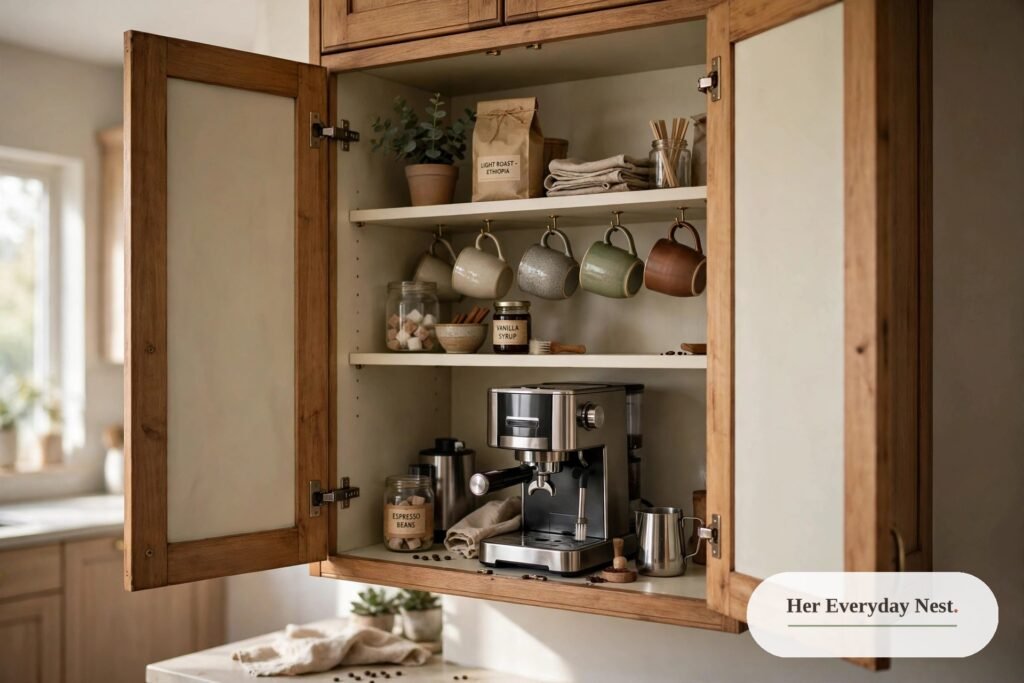
If you prefer clear counters, hide the coffee bar behind a door. Clear the bottom shelf of one cabinet for the machine, give the top shelves to mugs and beans, and close the doors when you are done — the mess disappears in two seconds. A small countertop board or freestanding shelf inside the cabinet gives the machine a level surface to sit on.
The cabinet bar works best in kitchens with one tall or deep cabinet to spare, and the back wall of the cabinet is free real estate: a row of adhesive hooks holds measuring scoops, and peel-and-stick tile turns the inside into a tiny cafe. Just make sure the machine has room for its lid to open and steam to escape, and pull it forward before brewing so the steam does not soak the cabinet above. Best for minimalists, tiny kitchens, and anyone who hates visual clutter.
4. Squeeze a Slim Cart Into the Gap Beside the Fridge
The space beside a fridge or between the counter and the wall is often 6 to 10 inches wide — dead space that fits a slim three-tier rolling cart perfectly. Top it with a compact machine, stack mugs on hooks underneath the top shelf, and keep beans and pods in jars on the lower tiers. Slim carts run roughly $20 to $60.
Measure the gap before you buy: a cart that is one inch too wide is useless, and a cart that is too deep blocks the fridge door. Keep heavy items on the bottom tier so the cart does not tip, and do not block vents or electrical outlets. These renter friendly coffee bar ideas work best when the station uses space that was doing nothing, and a 6-inch gap is the most overlooked spot in a small kitchen. Best for galley kitchens, narrow gaps, and rentals with no pantry whatsoever.

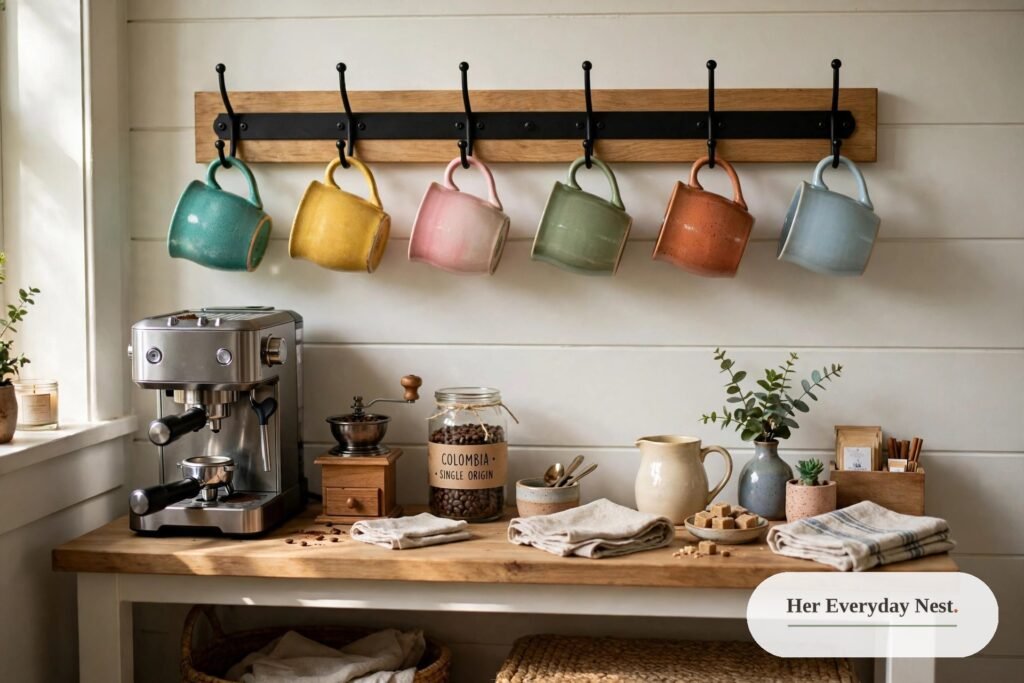
5. Hang Mugs on a No-Drill Rack and Free the Cabinet
A wall-mounted mug rack is the single most space-efficient piece in a coffee bar, because it turns mugs from a cabinet problem into a wall problem — and most small kitchens have more spare wall than spare shelf. A 12-hook rack holds a household’s actual mug rotation in about 16 inches of wall, and it hangs above the cart or counter rather than beside it, so it costs zero additional footprint.
For renters, skip the screws: adhesive hooks rated for kitchens hold a mug each on smooth tile or painted walls, and a slide-on under-cabinet hook rack clips onto an existing shelf with no hardware at all. A mug tree or small mug stand does the same job on the counter in the space of one mug. Keep only the mugs you actually drink from on display — two per person plus two for guests is plenty — and the rest stay in the cabinet. Best for mug collectors, tiny cabinets, and anyone whose cups have taken over a whole shelf.
6. Double the Tray With a Tiered Stand
When the footprint is fixed, height is free. A two- or three-tier stand doubles what a tray can hold without taking more counter: pods on the bottom, sugar and stirrers in the middle, something pretty on top. Tiered stands cost roughly $15 to $30 and lift straight off the counter when you need the space back.
The stand works because it separates the daily kit from the backup stock — the things you touch every morning stay at arm’s height, and the extras live one level up instead of spreading across the counter. Pair it with a tray underneath to catch drips and define the station’s edges. Best for countertop stations that keep creeping wider, and for anyone who owns more coffee gear than counter.

7. Style One Tray to Define the Zone
A tray is the cheapest way to make a coffee bar look intentional. One wooden or metal tray — roughly $10 to $25 — gathers the machine’s neighbours into a single footprint: the canister, the sugar jar, the spoon holder, and today’s mug. The tray’s edge is a boundary: anything that does not fit on it does not belong at the station.
The tray also protects the counter from drips and rings, which matters in a rental where the landlord notices stains. Choose a tray with a raised lip so nothing slides off, and keep it to one tray, not two — a second tray is how a station doubles in size overnight. Best for countertop corners, open shelves, and anyone who wants the cafe look for the price of a tray.

8. Turn an Awkward Nook Into a Cafe Corner
Awkward spaces — the dead corner by the dining table, the niche under the stairs, the odd recess beside a pantry — often make the best coffee bars, because they are already separated from the cooking zone. A narrow console table 10 to 14 inches deep fits in hallways and entries where a cabinet will not, and a small brewer plus a tray of mugs on top turns it into a station in minutes.
Style the nook like a destination, not a dumping ground: one small shelf above for beans and cups, a tiny plant or framed print, and a rug underneath to mark the zone. The rug is what tells the brain “this is the coffee corner” even when there is no wall around it. Best for open-plan apartments, dining corners, and kitchens with an unused nook.

9. Use a Freestanding Shelf Unit Over the Counter
When you cannot drill a floating shelf into the wall, let a freestanding shelf unit do the same job. A bakers rack or a small open shelf unit that stands on the counter — or on the floor beside it — holds mugs, canisters, and beans above the machine without a single screw. Basic units cost $30 to $80, and some even come with a built-in power outlet on the side, which solves the cord problem in one piece.
Keep the shelves shallow, around 8 to 10 inches deep, so they do not crowd the machine or block the cabinet doors above. Put the daily mugs on the lowest shelf where your hand reaches without thinking, and the display pieces up high. Best for renters whose leases ban shelf mounting, and for anyone who wants vertical storage without tools.

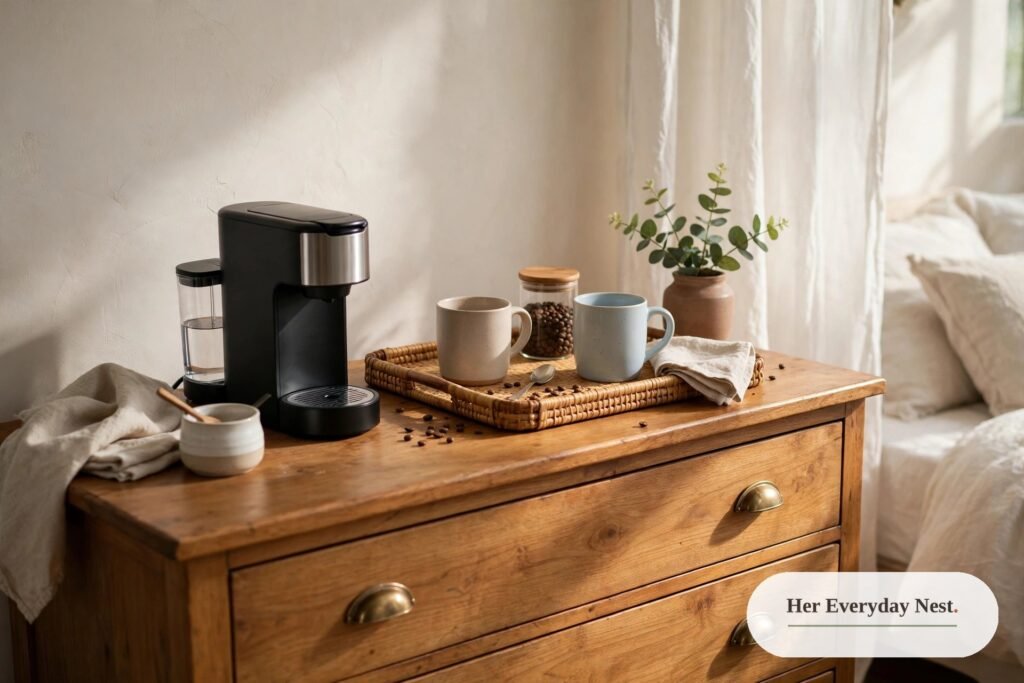
10. Move the Coffee Bar to the Bedroom or Living Room
Short on kitchen space? Move the coffee bar out of the kitchen entirely. A rolling cart in the living room or a small station on a bedroom dresser keeps the first cup of the day within reach, and it works because the only things a coffee bar truly needs are an outlet and a flat surface. A compact single-serve machine is the right brewer here — small, quiet, and happy on a sideboard.
Keep the setup tiny: machine, one canister, two mugs, and a small tray for drips. A mini fridge or a water carafe beside it handles the milk and water, and the whole station packs into one box when you move. Best for studios, one-bedroom apartments, and anyone whose kitchen has genuinely no space left.
11. Keep Only Three Things Out for Renter Friendly Coffee Bar Ideas
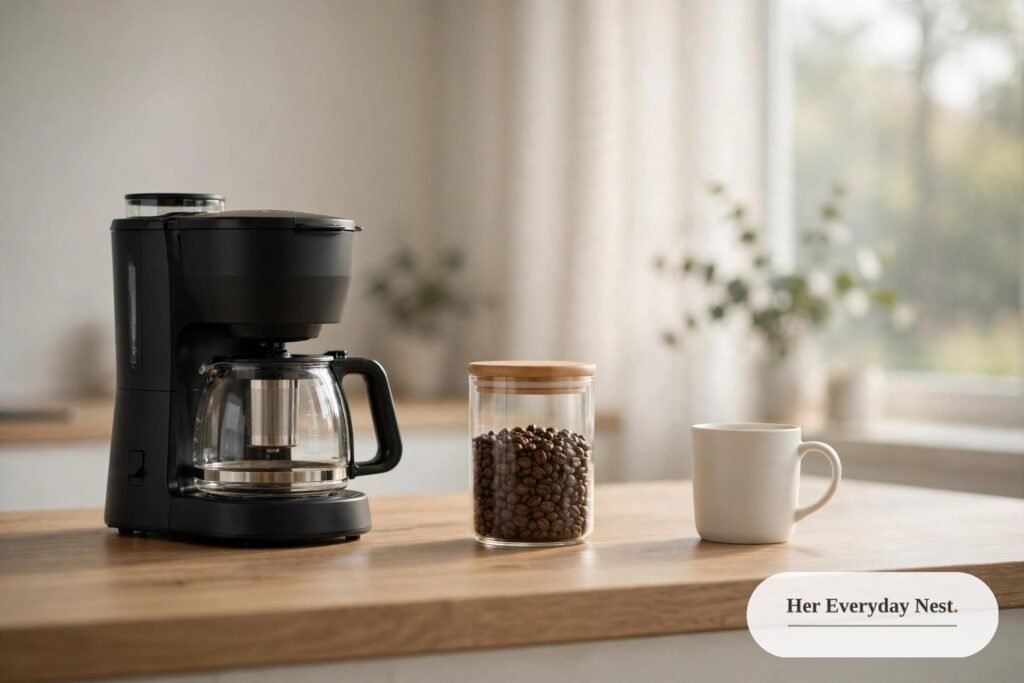
The rule that saves small coffee bars is simple: the machine you use daily, one jar of beans or pods, and your favourite mug stay out. Everything else — spare mugs, backstock, the frother you use on weekends — goes in a cabinet. These renter friendly coffee bar ideas work because the counter reads as styled, not crowded, and a station with three things on it is a station you can actually wipe clean in thirty seconds.
Rotate the third item with the season: a jar of cinnamon in winter, a bottle of iced-coffee syrup in summer, a small vase in spring. The rotation keeps the station feeling fresh without buying anything new, and it stops the slow creep of gadgets that turns a coffee corner into a storage shelf. Best for minimalists, tiny counters, and anyone whose station keeps growing.
12. Frame the Station With a Peel-and-Stick Backsplash or Painted Arch
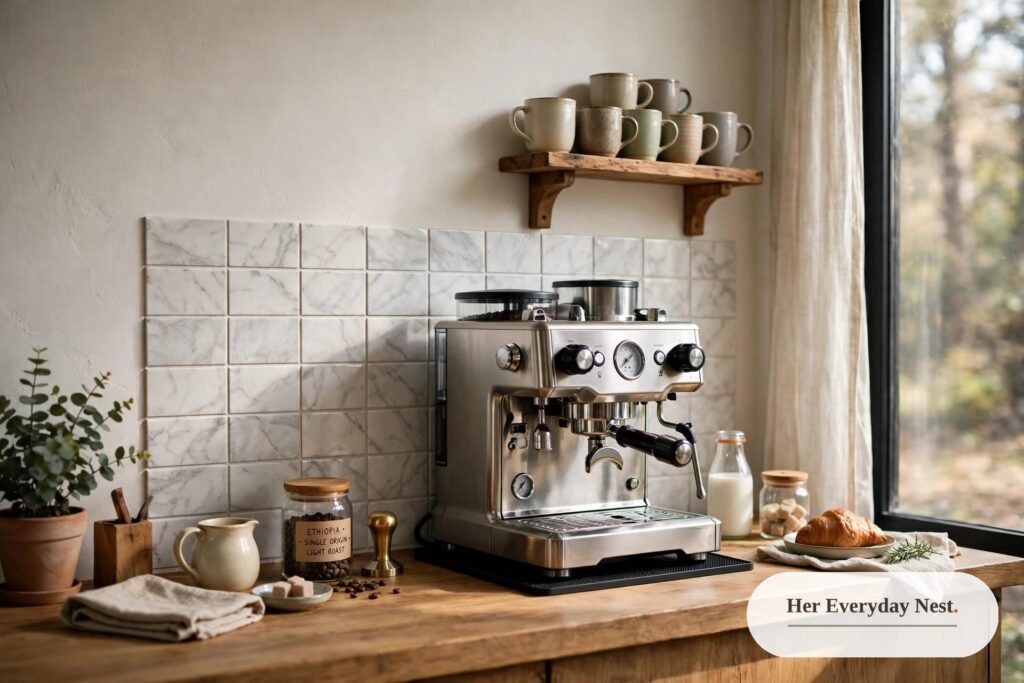
A backsplash turns a plain wall into a station that looks intentional, at any size. Peel-and-stick tiles are the renter’s version: they go up inside a cabinet or behind the machine in an afternoon, cost roughly $10 to $30, and peel off clean when you move. A painted arch does the same job for the price of a sample pot — tape out a shape about as wide as the brewer plus a canister, paint it a shade darker than the wall, and it frames the coffee bar like a built-in niche.
Both tricks work because they give the station a backdrop, which is what makes a few objects on a counter read as a designed corner instead of a pile. Keep the tile or paint to the station’s width only — a full-wall backsplash is a renovation, and this is a coffee bar. Best for plain white kitchens, blank walls, and anyone who wants the custom look without the custom price.
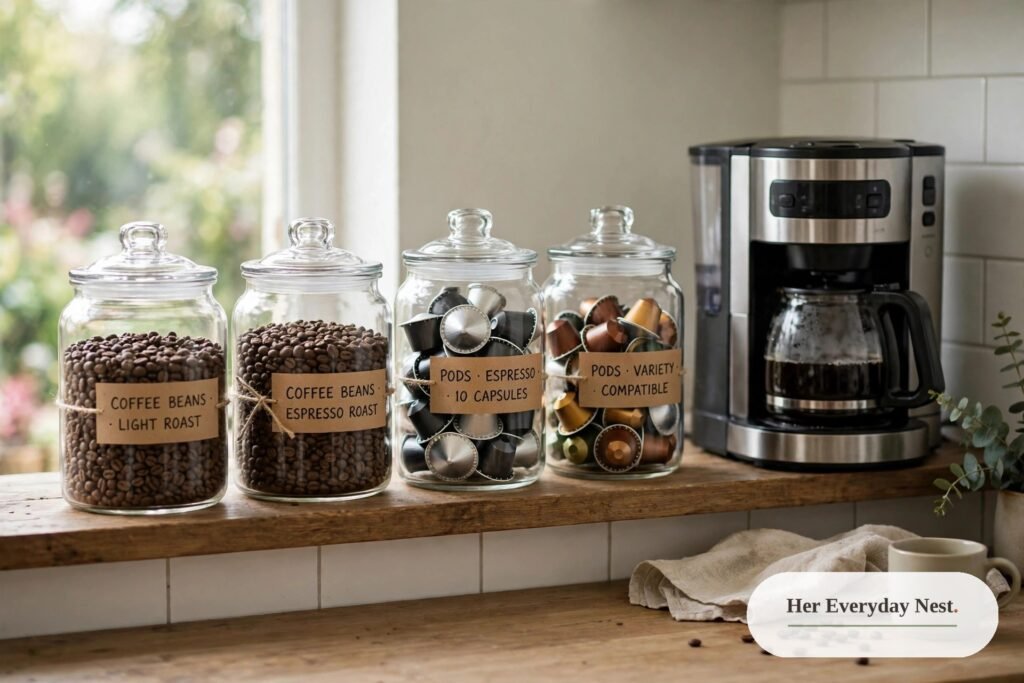
13. Store Beans and Pods in Clear Canisters You Can See
Clear canisters are the storage equivalent of a label: you can see at a glance what is running low, and you never open three jars looking for the decaf. Square glass jars with airtight lids keep beans fresh, stack neatly, and cost roughly $10 to $25 for a set — and a clear pod organizer with a lid keeps single-serve pods visible without a drawer full of loose boxes.
Keep the canisters to one size family so they line up, and label them with the roast and the date you filled them, not just a pretty word. The same clear-container habit works across the whole kitchen — our renter-friendly pantry organization ideas run the same system for dry goods. Best for bean buyers, pod users, and anyone who has ever bought coffee they already owned.
14. Warm the Corner With a Battery Puck Light
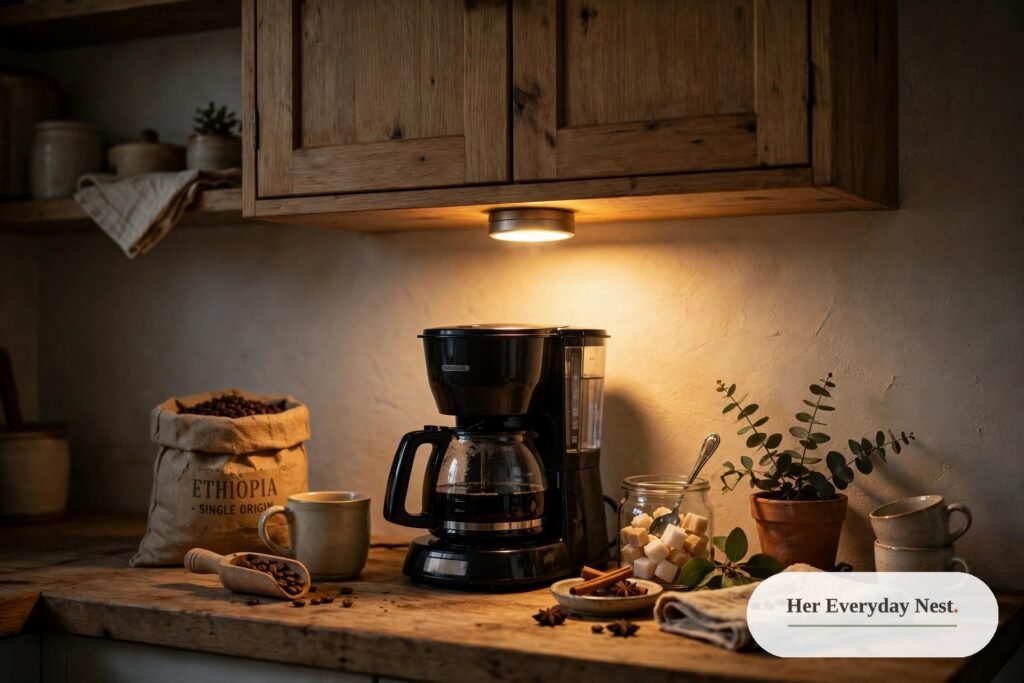
Most coffee corners are dim in the morning, and a small battery-powered puck light under the cabinet makes the station feel like a cafe nook — no wiring, no drilling, no electrician. Stick-on rechargeable lights cost roughly $10 to $20 for a set, run on a remote or a tap, and peel off clean when you move.
Place one light above the machine so you can see the water level and the buttons, and one on the shelf above the mugs if the corner is deep. Warm white light flatters wood, brass, and ceramic far better than cool white, which is the difference between a cozy cafe corner and a laboratory. Best for dark corners, under-cabinet shadows, and early-morning brewers.
15. Keep It Working With a Sunday Reset
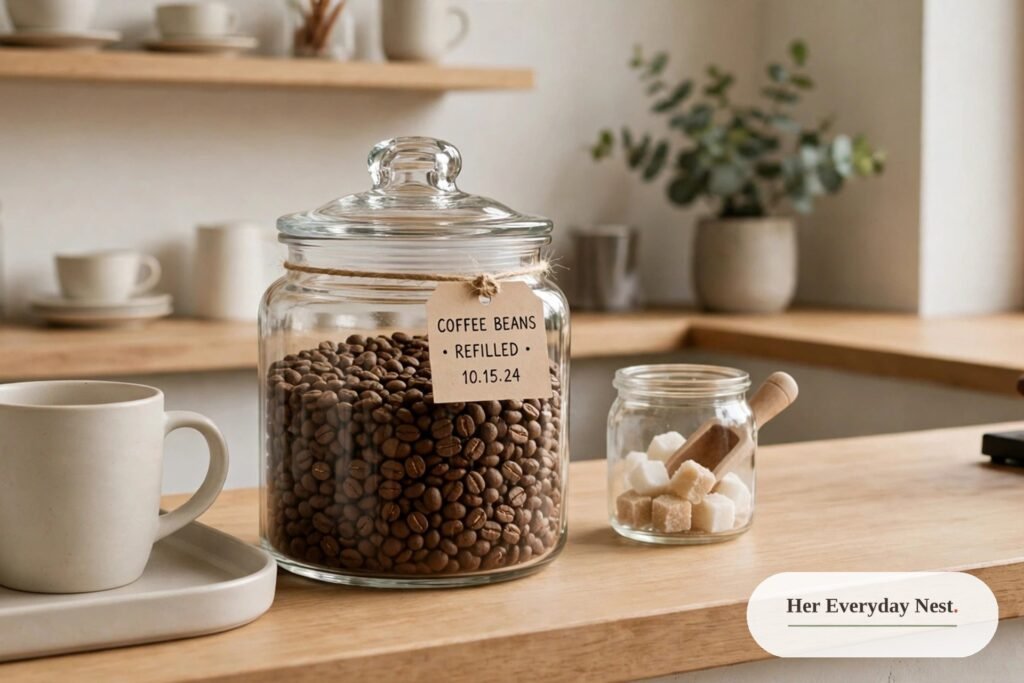
A system only works if it is easy to maintain, and this last idea is the one that keeps the other fourteen from sliding back into chaos. Run a five-minute Sunday reset: wipe the tray and the machine, toss stale beans, refill the canister, and return any mug that migrated to the desk or the sofa. Put new pods behind older ones so the oldest gets used first, and keep a running list on the fridge for the beans and filters you are about to run out of.
If a category outgrows its spot, adjust the zone rather than squeezing items elsewhere — that is how a station survives longer than a month. And if the machine itself is the bottleneck, choosing the right brewer matters more than another organizer: our how to choose a coffee maker guide walks through size, brew style, and budget before you buy. Best for everyone, and the cheapest idea on this list: it costs five minutes a week.
A small rental kitchen does not need a spare room to have a coffee bar. If you can walk up, brew a cup, and put the mug back without moving three other things, the station is doing its job. The order matters more than the furniture: pick the spot near an outlet first, put the machine down, add a tray and a mug rack, and only then add a cart, a shelf, or a backsplash where the setup still falls short. These renter friendly coffee bar ideas are all removable by design — no holes, no permanent changes, and everything comes with you when the lease ends, which is exactly how rental storage should work. For a broader gallery of small-space setups, Green Wedding Shoes’ 39 coffee station ideas cover everything from counter corners to bedroom bars, while The Home Coffee Bar’s setup guide walks through the four-zone layout with measurements for each step. If the kitchen is sorted, the entry is next — our luxury kitchen decor ideas for renters show how to make the whole rental kitchen look high-end without renovating. Start with an 18-inch corner this weekend, add one tray, and let the zone do the rest.
How much counter space do I need for a coffee station?
About 18 inches of width is enough for one brewer, one canister, and a mug — especially if you claim the end of a counter run or a corner, where the wall on two sides gives the station firm boundaries. A single-serve or drip coffee maker needs roughly 6 by 12 inches of clearance, plus a few inches of height above it for the lid to open. If you cannot spare 18 inches, a slim rolling cart beside the fridge holds the whole setup with zero counter at all.
How do I set up a coffee bar in a small apartment?
Pick one of three setups: carve out a defined zone on your existing kitchen counter, repurpose a narrow table or bar cart in your living or dining area, or use vertical wall space with a mug rack and a tiered stand. All three work in compact spaces and need no permanent changes, which is what makes these renter friendly coffee bar ideas work in a rental. Start with the machine near an outlet, add a tray to define the zone, and keep only the daily kit out.
What is the best coffee bar setup for a rental?
Anything that needs no drilling and no permanent changes. A freestanding bar cart, a narrow accent table, or a defined countertop zone with a tiered stand and adhesive hooks are the safest options, and a freestanding shelf unit gives you vertical storage without touching the wall. Avoid floating shelves that need studs unless your lease explicitly allows them — a bakers rack or a leaning shelf does the same job with zero holes.
Can I build a coffee station without any drilling?
Yes — tension rods, adhesive hooks, over-door organizers, and freestanding carts need zero drilling, and every solution in this guide is renter-safe. Adhesive hooks hold 3 to 7 pounds each on clean, dry, smooth paint: press firmly for 30 seconds, wait an hour before hanging anything, and respect the weight limits. Stick-on lights, slide-on under-cabinet hooks, and peel-and-stick tile finish the station with no holes at all.
How do I keep a coffee bar from looking cluttered?
Keep only three things out — the machine you use daily, one jar of beans or pods, and your favourite mug — and store everything else in a cabinet. A tray with a raised lip defines the station’s edges, so anything that does not fit on it does not belong there. Run a five-minute Sunday reset to wipe the tray, toss stale beans, and return stray mugs, and rotate one seasonal item on the tray so the station feels fresh without growing.

Emily Carter is the founder and editor of Her Everyday Nest. After nine years of renting in five apartments across three cities, she's learned how to make any rental feel like home.