

Makeup Steps in Order: What Goes On First and Why
If you have ever stood in front of a mirror wondering whether blush comes before powder, or whether concealer goes on before foundation, you are not alone. The makeup steps in order follow one simple logic: care for your skin first, build an even base, add shape and color, finish the eyes and lips, and then set the whole face. Once you know that logic, you can skip steps, swap products, or build a full-glam look without ever feeling lost.
This guide walks through the full makeup steps in order, explains why each step sits where it does, and gives you a 5-minute version, a polished everyday version, and a full-glam version that moves the eyes to the front. No step here is mandatory on its own — the order is what matters, and you can drop anything you do not use.

The Three Rules Behind the Makeup Steps in Order
Before the step-by-step list, it helps to know the three rules that explain almost every decision in the makeup steps in order. First, skin care always comes before makeup. Makeup sits on top of prepared skin, never underneath it. Second, liquids and creams always go on before powders. Powder absorbs moisture, so a cream pushed over powder tends to grab, drag, and look patchy. Third, work from broad to fine: foundation covers the most area, so it goes first; concealer targets smaller spots; cheek color targets specific zones; and liner and mascara are the finest work of all. Setting spray goes over the finished face, last of all.
Keep those three rules in mind and you can place any new product you buy. A tinted moisturizer takes foundation’s place. A cream bronzer moves before powder, even though powder bronzer goes after it. A lip balm fits into the skin-prep stage, where it has time to soften your lips while you do the rest of your face.
Step 1: Prep Your Skin
Good makeup starts with clean, comfortable skin, and skin prep is the first stage of the makeup steps in order. Wash your face with a gentle cleanser and pat dry — rubbing with a towel is not needed and can leave skin irritated before you even begin. If you use a medicated treatment or a prescription product, it goes on right after cleansing, before anything else.
Next comes moisturizer. Let it sink in until your skin no longer feels wet, because primer and foundation slide around on a damp surface. If you have a few minutes, wait a couple of minutes after moisturizer before moving on. Then, in the daytime, sunscreen is the final skin-care layer, and makeup goes over it. Dermatologists generally recommend a broad-spectrum sunscreen with an SPF of at least 30. Foundation or primer with SPF is a useful bonus, but it does not replace a dedicated sunscreen layer, and sunscreen needs reapplying roughly every two hours outdoors. At night, simply skip the sunscreen step. If you wear contact lenses, put them in right after cleansing, with freshly washed hands, before any cream touches your fingers — and do any hairspray before inserting lenses.

Step 2: Primer (Optional, But Helpful)
In the makeup steps in order, primer goes on after sunscreen and before foundation. It is optional, but it can smooth texture, blur the look of pores, or control oil, depending on the formula, and it can help foundation wear longer. A pea-sized amount is usually enough for the whole face. Let it sit for at least 30 seconds, or until it is no longer tacky, before foundation. If your skin is already comfortable and your foundation wears well without it, this is one of the easiest steps to skip on a busy morning.
Step 3: Color Corrector (Optional)
Color correctors use opposite colors to cancel each other out: green tones neutralize redness, peach tones soften blue or purple under-eye shadows on lighter skin, and orange or red tones do the same on deeper skin. Tap a thin layer only where it is needed. Too much will show through foundation instead of disappearing under it, so start with less than you think you need.
Step 4: Foundation
Foundation evens out the whole face, and every later step in the makeup steps in order builds on it. Start in the center of the face, where most people need the most coverage, and blend outward toward the hairline and jaw. A brush, a damp sponge, or clean fingers all work. Begin with a small amount and add a second thin layer only where you want more coverage — two thin layers usually look more natural than one thick one.
Check the shade along your jawline in daylight. If the color stops at the jaw, blend it down a little so there is no line. If you use a skin tint or tinted moisturizer instead of foundation, it takes foundation’s place in the order, and everything else follows exactly the same way.

Step 5: Concealer
Most guides put concealer after foundation, and there is a practical reason: foundation already covers much of the unevenness, so you use less concealer and only where something still shows, such as under-eye shadows, redness around the nose, or a blemish. Pat it in with a fingertip, brush, or sponge rather than rubbing, so it stays where you put it.
The main exception is powder foundation. With a powder base, put a liquid or cream concealer on first, so cream never goes on top of powder. Some makeup artists also prefer concealer first if they tend to be heavy-handed with it, letting foundation soften the edges — that is a matter of preference, not a rule, and the after-foundation order is the safer default for beginners.
Step 6: Setting Powder
In the makeup steps in order, powder sets the liquid and cream layers underneath so they last longer and shine less. Use a light hand and focus on the places that get shiny first, usually the forehead, nose, and chin, plus under the eyes if your concealer tends to crease. Pressing powder in with a puff gives more hold; sweeping it with a fluffy brush gives a softer finish. You do not need to powder the whole face heavily — a light pass where you need it is enough, especially if your skin is on the drier side.
Step 7: Bronzer, Blush, and Highlighter
With powder formulas, the usual order is bronzer, then blush, then highlighter. Sweep bronzer where the sun would naturally hit, such as the top of the forehead, the cheekbones, and along the jaw. Contour is different from bronzer: it is a cool-toned, matte shade a little deeper than your skin, placed in the hollows under the cheekbones to mimic shadow. Smile slightly to find the apples of your cheeks for blush, then blend up toward the cheekbones, starting with less than you think — it is easier to add than to remove. Tap highlighter on the high points last, such as the tops of the cheekbones, the brow bone, or the bridge of the nose, so other powders do not dull it.
Cream versions of any of these go on before setting powder, straight after concealer, and blend best with fingertips or a damp sponge while the base is still fresh. If you mix formulas, remember the rule: all creams before all powders.

Step 8: Brows and Eye Makeup
The eye makeup steps in the makeup steps in order go from the frame to the finest detail: brows, eyeshadow, eyeliner, and mascara. Do brows once the base is done, so foundation does not smear them, filling sparse areas with light, hair-like strokes rather than a solid block, then brushing them into place with a clear or tinted gel.
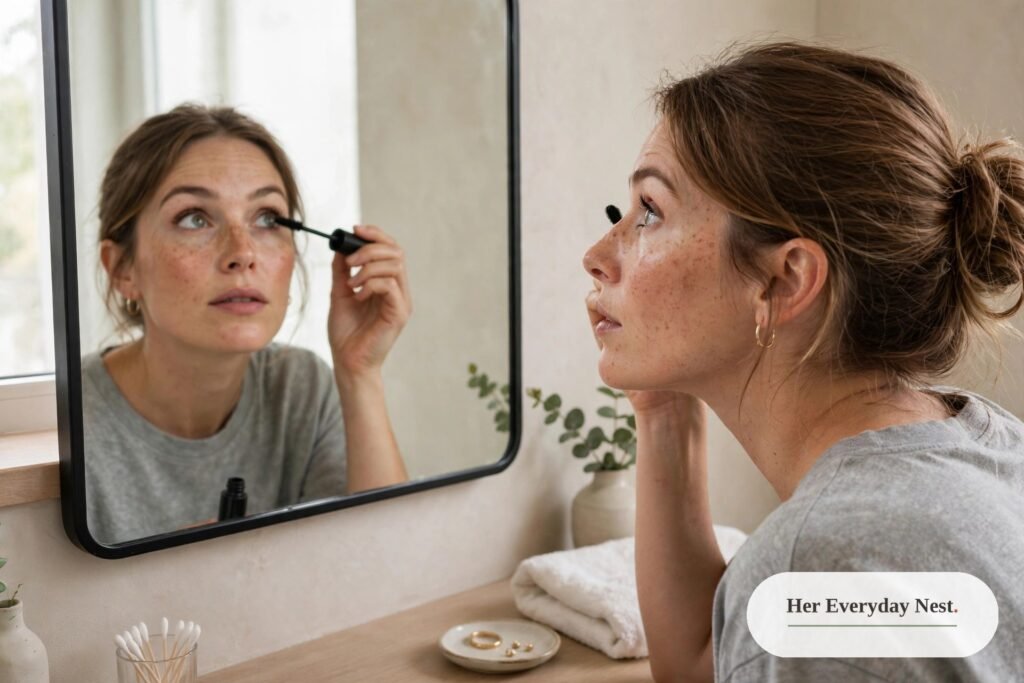
For eyeshadow, an eyeshadow primer or a thin layer of concealer on the lid gives shadow an even base and helps it last. A simple way to build a look is a light shade over the lid, a medium shade in the crease, and a deeper shade at the outer corner, tapping excess powder off the brush first to reduce fallout on your cheeks. Liner goes on after shadow, so the line sits on top and stays sharp — pencil is the most forgiving for beginners, while liquid liner gives a crisp line but shows every wobble. Mascara comes last for the eyes, because lengthened lashes get in the way of shadow and liner. If you curl your lashes, do it before mascara, wiggling the wand at the roots and pulling it through to the tips.
Step 9: Lips, Then Setting Spray
Lips take four quick steps. First, blot off any leftover lip balm from the prep stage so lipstick does not slide. Second, outline the lips with a liner close to your lip or lipstick shade, filling in the whole lip with liner if you want the color to wear evenly. Third, apply lipstick from the center outward, blotting once on a tissue if you want it to last longer. Fourth, if you use gloss, add it last and keep it to the center of the lips.
Setting spray closes the routine, and it is the final step in the makeup steps in order. Hold the bottle at the distance its label gives, close your eyes, and keep them closed until the mist settles, especially if you wear contacts. Let it dry without touching. Setting powder and setting spray do different jobs — powder controls shine and sets the base early, spray goes on at the end and helps everything look less powdery and hold together — and many people use both.

Three Versions of the Routine
The full routine above is a menu, not a requirement. For a 5-minute version, use moisturizer and sunscreen, a skin tint or light foundation, concealer only where needed, a cream blush (before any powder, or skip powder entirely), mascara, and a tinted lip balm. That keeps the makeup steps in order intact while skipping primer, corrector, powder, bronzer, highlighter, shadow, and liner.
For a polished everyday version of the makeup steps in order, add primer, setting powder, powder blush, brows, a single wash of eyeshadow, and lipstick. For a full-glam version, do the eyes first: brows, shadow, liner, and mascara before foundation, so you can clean up any fallout under the eyes, then build the base as usual and finish with lips and setting spray. The simple rule is to follow the standard order unless most of your makeup is around the eyes — then do the eyes first.
Common mistakes are easy to fix once you know the order. If your base looks cakey, you are probably layering too much product or putting cream over powder — try thinner layers and let each one settle before the next. If your blush disappears, you may be putting powder over it after it has set, or using too little to start with. If your eye makeup smudges by midday, an eyeshadow primer and setting the lid lightly with powder before shadow usually helps. Build each stage in thin layers, check your work in daylight before you leave, and keep a small brush or sponge in your bag for quick touch-ups rather than adding more product on top of a finished face.
For hair to go with your finished face, see our guide to stylish feed-in braid hairstyles, our roundup of wedding hairstyles for little girls, and our stylish outfit ideas to save for every occasion. For wider beauty guidance, see the skin-care basics from the American Academy of Dermatology and the makeup application guides at L’Oréal Paris.
Final Thoughts
The makeup steps in order are less about memorizing a long list and more about remembering the logic: skin first, liquids before powders, broad before fine, and setting spray last. Learn that, and you can build a five-minute face or a full-glam look with confidence, skip whatever you do not need, and place any new product exactly where it belongs. Start with the standard order, adjust only where your skin or your look asks for it, and let the routine settle into something that feels like yours.
Frequently Asked Questions
What is the correct makeup steps in order for beginners?
Start with skin care (cleanser, moisturizer, sunscreen), then primer, foundation, concealer, setting powder, bronzer and blush, brows and eye makeup, lips, and finally setting spray. You can skip any optional step, but keep the same broad-to-fine order so liquids go on before powders.
Does concealer go before or after foundation?
After foundation in most routines, because foundation already evens out much of the skin, so you need less concealer and only where something still shows. The exception is powder foundation: put liquid or cream concealer on first, so no cream goes on top of powder.
Should I do my eyes before or after foundation?
Do the face first for most everyday looks. Do the eyes first only for smoky, glitter or very dark eye makeup, so any fallout can be cleaned up before foundation and concealer go on.
Where do cream blush and cream bronzer go in the order?
Cream cheek products go on before setting powder, right after concealer, while the base is still fresh. Powder blush and bronzer go on after setting powder. Never put a cream product over a powder layer, or it can grab and look patchy.
Do I need both setting powder and setting spray?
No, they do different jobs and you can use either or both. Setting powder controls shine and locks the base early in the routine, while setting spray goes on last to melt the layers together and help the finished look last.

Emily Carter is the founder and editor of Her Everyday Nest. After nine years of renting in five apartments across three cities, she's learned how to make any rental feel like home.