
Asian Pepper Steak
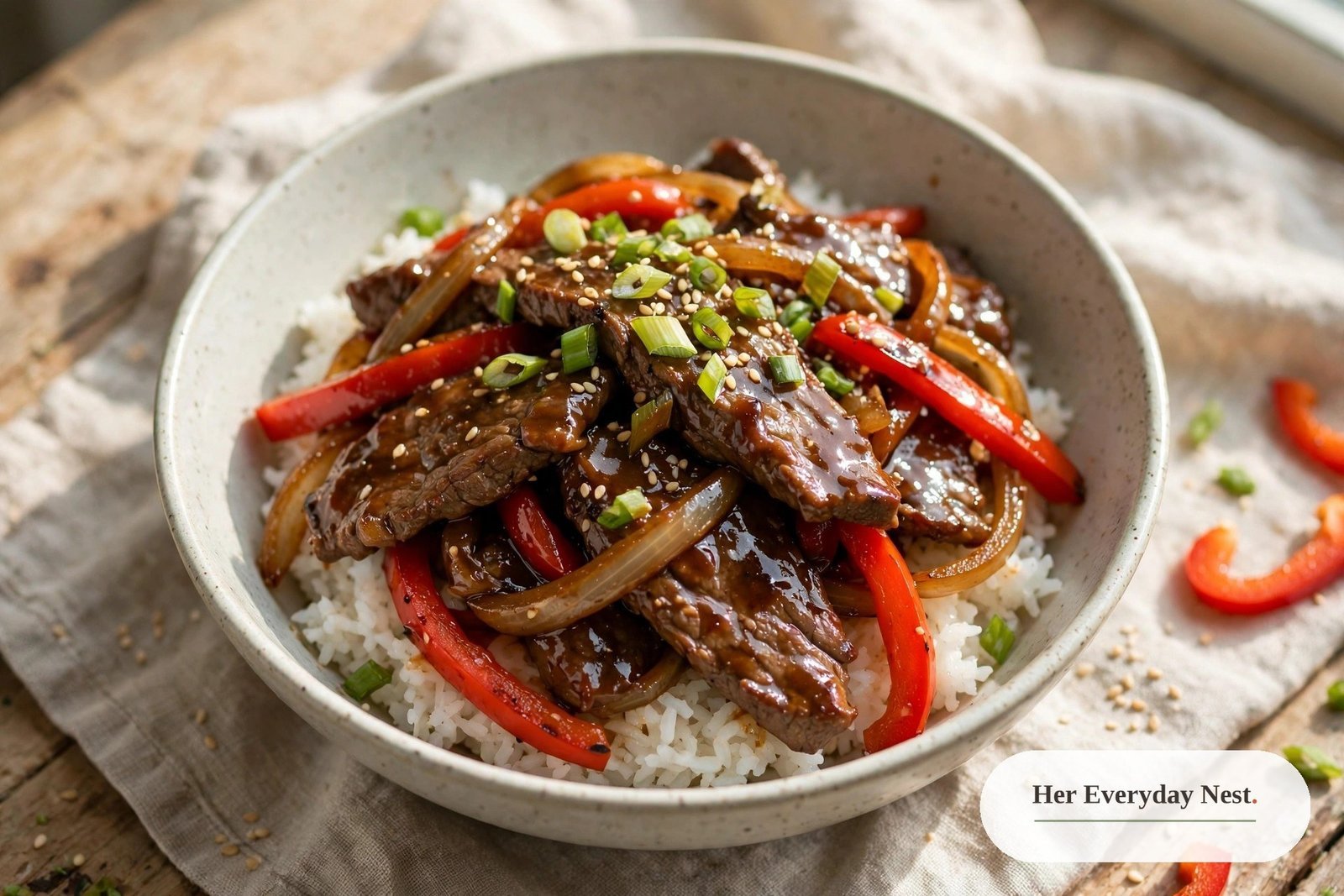
There is a reason takeout pepper steak is so popular, and there is an even better reason to make it at home. Asian pepper steak is tender strips of beef, sweet peppers, and onions wrapped in a glossy, peppery sauce, served over fluffy rice. It tastes like your favorite restaurant version — maybe better — and it comes together in under 30 minutes, with ingredients you control and a sauce that has not been sitting in a delivery bag for half an hour.
The trick is not a long ingredient list. It is technique: thinly sliced beef, a very hot pan, peppers that stay bright and crisp, and a sauce that thickens at the very end into a shiny coating instead of a watery pool. Once you learn the rhythm — sear, remove, cook the vegetables, bring it all back together — you will wonder why you ever waited for delivery.
Why You Will Love This Asian Pepper Steak
First, it is genuinely quick. The whole dish cooks in the time it takes rice to steam, so dinner is on the table in about half an hour. Second, it is balanced: savory, a little sweet, peppery, and fresh, with scallions and sesame seeds on top for crunch. Third, it is endlessly adaptable — add broccoli, mushrooms, or snap peas, adjust the pepper to your taste, or swap the rice for noodles.
It is also a smart recipe to keep in your back pocket for busy weeks. The sauce ingredients are mostly pantry staples — soy sauce, brown sugar, garlic, ginger — and the beef and peppers are easy to pick up on a single grocery run. Make it once, and it will become one of those dinners you cook without even looking at the recipe.
Ingredients for Asian Pepper Steak
For the Steak
- 1 1/2 pounds flank steak or sirloin, thinly sliced against the grain
- 2 tablespoons cornstarch
- Salt and black pepper
- 2 tablespoons oil

For the Sauce
- 1/2 cup low-sodium soy sauce
- 1/4 cup beef broth
- 2 tablespoons brown sugar
- 1 tablespoon oyster sauce
- 1 teaspoon sesame oil
- 4 cloves garlic, minced
- 1 tablespoon fresh ginger, minced
- 1 teaspoon cracked black pepper
- 1 tablespoon cornstarch mixed with 2 tablespoons water

Vegetables and Serving
- 1 red bell pepper, sliced
- 1 small onion, sliced
- Cooked white rice, for serving
- Sliced scallions and sesame seeds, for topping
How to Make Asian Pepper Steak
Step 1: Prep the Beef
Slice the steak thinly against the grain — this is the single most important step for tender beef. Cutting against the grain shortens the muscle fibers, so the meat stays tender instead of chewy. Toss the slices with cornstarch, a little salt, and black pepper. The cornstarch gives the beef a silky coating and helps the sauce stick later.
Step 2: Make the Sauce
Whisk together the soy sauce, beef broth, brown sugar, oyster sauce, sesame oil, garlic, ginger, and black pepper, and set the bowl aside. Having the sauce ready before the stove gets hot matters, because the cooking itself moves fast once the pan is heated. Keep the cornstarch slurry separate until the end — it is your thickener, not part of the base sauce.
Step 3: Sear the Steak
Heat the oil in a large skillet or wok over high heat. Cook the beef in batches so it browns properly instead of steaming, and remove each batch to a plate once it has deep caramelized edges. This is the same high-heat, single-layer principle that makes a great sear in our garlic steak bites and rice — a crowded pan is the enemy of browning.

Step 4: Cook the Vegetables
In the same pan, cook the onions and red peppers for 3 to 4 minutes until they are slightly softened but still vibrant. The peppers should stay bright red with a little texture — they will soften a touch more once the sauce goes in, so do not cook them to mush here.

Step 5: Bring Everything Together
Add the beef back to the pan, pour in the sauce, and toss everything together. Let it simmer for 2 to 3 minutes, then stir in the cornstarch slurry and cook until the sauce thickens into a glossy coating that clings to the beef instead of pooling at the bottom. Spoon the pepper steak beside fluffy white rice, top with scallions and sesame seeds, and serve immediately while hot.
Tips for Restaurant-Style Pepper Steak
Slice the beef as thinly as you can — partially freezing it for 20 minutes makes slicing much easier. Use freshly cracked black pepper for a bolder flavor than pre-ground. Slice the peppers evenly so they cook at the same rate. And add the scallions right before serving so they stay bright green. For another classic take on the dish, The Woks of Life pepper steak and Delish’s pepper steak recipe are both worth comparing.
Easy Variations
Add broccoli florets, mushrooms, or snap peas along with the peppers for a heartier stir-fry. Swap the white rice for brown rice, jasmine rice, or even noodles. For a little heat, add a pinch of red pepper flakes or a drizzle of chili oil to the sauce. And for a lighter plate, serve the pepper steak over cauliflower rice or a big pile of steamed vegetables. It also pairs beautifully with simple sides — think of it the way you would a creamy macaroni salad at a cookout: one reliable dish that goes with almost everything, including our homegrown vegetables when peppers are in season.

Storing and Reheating
Leftovers keep in the fridge for 3 to 4 days in an airtight container, and the flavors actually get a little better overnight. Reheat gently in a skillet over medium heat with a splash of water or broth to loosen the sauce, rather than microwaving it on high, which can toughen the beef. Store the rice separately so it stays fluffy.
Frequently Asked Questions
What cut of beef works best for Asian pepper steak? Flank steak and sirloin are both excellent because they stay tender when sliced thin against the grain. Skirt steak also works. Avoid very lean, tough cuts unless you slice them extremely thin.
Why slice the beef against the grain? Cutting against the grain shortens the muscle fibers, which keeps the beef tender instead of chewy. It makes a bigger difference than any marinade, and it is the easiest upgrade you can make to any stir-fry.
How do I get a glossy sauce instead of a watery one? The cornstarch slurry at the end is the key. Stir it in after the sauce simmers, and cook for another minute or two until it thickens into a shiny coating. If the sauce still looks thin, the pan may not be hot enough — give it another minute of simmering.
Can I make Asian pepper steak less spicy? Yes — the heat here comes mainly from black pepper, so simply use less of it. Skip any chili additions, and add a little extra brown sugar or a splash more broth if you want a milder, sweeter sauce.
Can I add more vegetables to pepper steak? Definitely. Broccoli, mushrooms, snap peas, and green beans all work well. Add firmer vegetables like broccoli with the peppers, and quicker-cooking ones like snap peas in the last minute or two.
Final Thoughts
Asian pepper steak is one of those recipes that earns a permanent spot in your rotation: savory, slightly sweet, peppery, and loaded with flavor in every bite. Between the glossy beef, tender peppers, fluffy rice, and fresh scallions, it looks impressive without actually being difficult — and once you make it at home, takeout starts feeling a little unnecessary. Give it a try this week, and keep the sauce recipe handy. You will use it again.

Emily Carter is the founder and editor of Her Everyday Nest. After nine years of renting in five apartments across three cities, she's learned how to make any rental feel like home.