
30 Japandi Living Room Ideas for Effortless Calm
If your living room feels busy no matter how often you tidy it, the problem may not be clutter at all — it may be that the room has too much competing for attention. These japandi living room ideas take the opposite approach: fewer pieces, quieter colors and natural materials, so the room feels calm the moment you walk in. Japandi blends Japanese wabi-sabi, which finds beauty in imperfection and handmade things, with Scandinavian warmth and practicality. The result is a living room that is minimal without feeling cold, and stylish without feeling staged.
You do not need to replace everything to get the look. Start with one anchor piece, clear a few surfaces and warm the room with pale wood and linen, and the calm follows quickly. Below are thirty ideas, grouped so you can start with furniture, move on to light and texture, and finish with the small styling choices that make the whole style work.
Why Japandi Living Room Ideas Feel So Calming
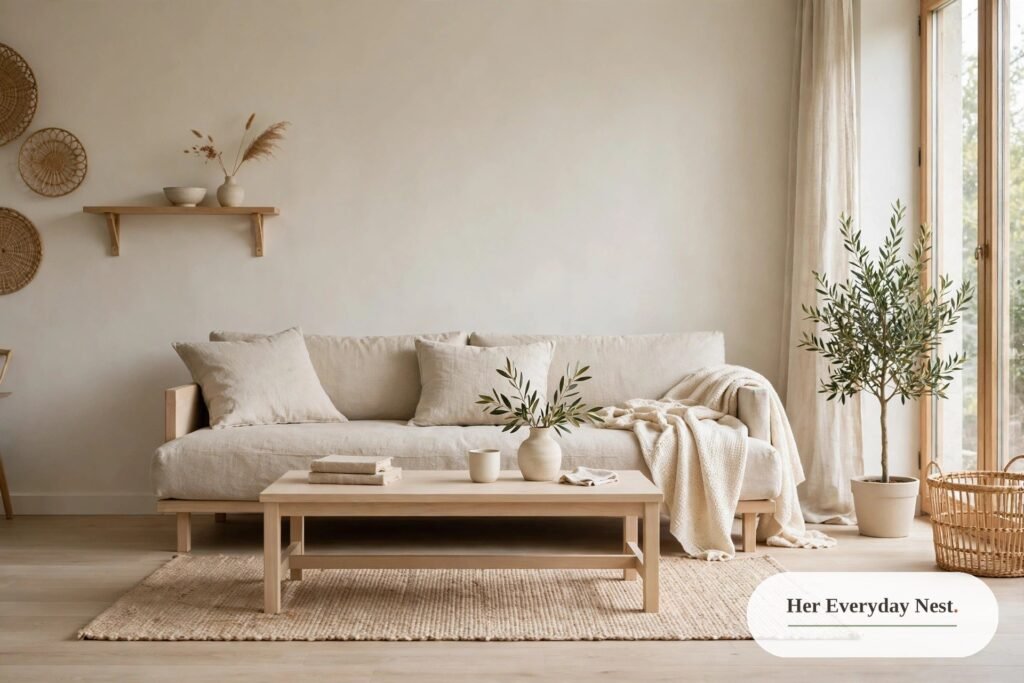
Japandi rooms calm the eye because they limit decisions. The palette stays in cream, oatmeal, stone and pale wood, furniture sits low, and every surface holds one or two considered objects instead of a collection. With less visual noise, the room genuinely feels quieter — which is why the style suits people who are tired of maximalist decorating and want their living room to be a place to unwind.
The style is also forgiving. Handmade ceramics with uneven glazes, wood with visible grain and linen that wrinkles slightly are all welcome here, because imperfection is part of the philosophy. That makes Japandi one of the most livable minimal styles: it looks intentional without demanding perfection.
30 Japandi Living Room Ideas for a Calmer Home
Work through these japandi living room ideas in order, or jump to the group your room needs most. Even five or six of them, done well, can change how a living room feels.
Anchor Furniture Ideas
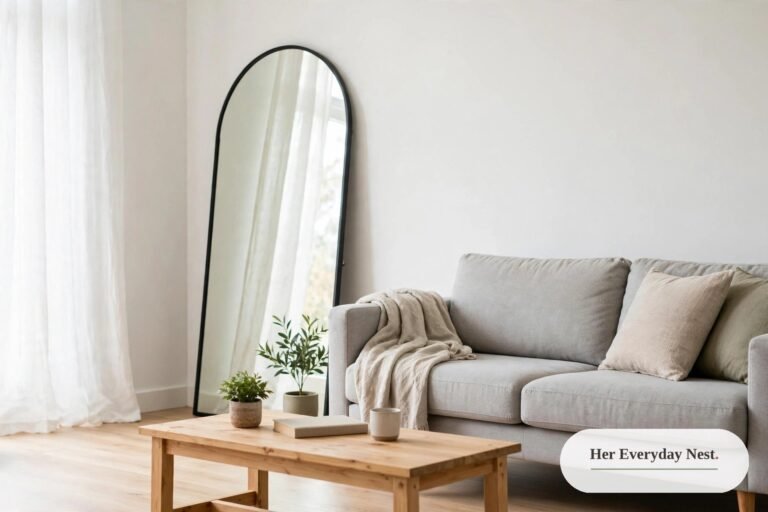
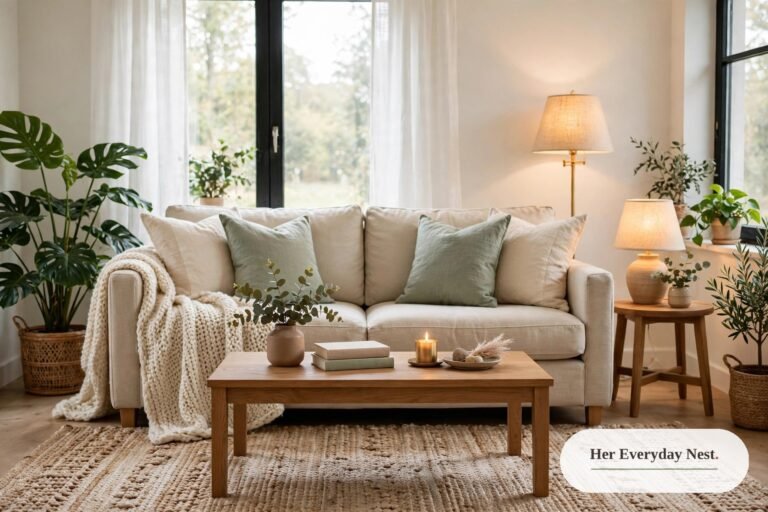
1. Choose a low-profile linen sofa. A low sofa in oatmeal, cream or stone opens up the room visually and sets the proportions for everything else. Keep cushions to two or three in matching tones and fold one chunky cream throw over an arm.
2. Try tatami-inspired floor seating. Skip the sofa in a smaller room and define the seating area with a natural-fibre rug, linen floor cushions and a very low wooden table. Add a ceramic tea set and the space becomes a slow, grounded gathering spot.

3. Use a low wooden bench instead of a coffee table. A long, low bench in pale oak or ash works as extra seating, a surface for tea and books, and a sculptural element when empty.
4. Add a cream boucle lounge chair. One sculptural boucle chair in a corner, with a small wood side table and a floor lamp, brings the soft Scandinavian side of Japandi into the room.

5. Pick a modular sofa for flexible rooms. A simple modular sofa in a pale neutral can be rearranged for guests, reading or movie nights without breaking the room’s calm lines.
6. Keep furniture legs visible and low. Short wooden legs and low profiles keep the room feeling open and grounded, and make even a small living room feel less crowded.
Tables, Storage and Surfaces
7. Style a minimal oak coffee table. A round or organic-shaped pale oak table holding one ceramic vase with a single dried branch — and nothing else — is the classic Japandi coffee table. The empty space around the object is what makes it work.

8. Upgrade to a stone or travertine coffee table. For a richer room, a solid travertine or honed concrete table in a rounded form becomes the sculpture in the room. Keep styling to one or two items maximum.
9. Invest in hidden storage. Floor-to-ceiling cabinets in pale oak, or painted the same color as the walls with handle-less fronts, hide the television, books and everyday clutter that break Japandi calm.
10. Curate a bookshelf with empty shelves. Group books in small horizontal stacks, add one ceramic vessel per shelf, and leave at least one shelf completely empty. The empty space is as important as the filled space.
11. Display wabi-sabi pottery on one open shelf. Three to five hand-thrown vessels in cream, sand and terracotta, in odd numbers and varied heights, celebrate imperfection instead of hiding it.
12. Use a low console for ceramics only. A low console table holding a small collection of ceramics keeps display intentional and stops surfaces from accumulating random objects.
Light, Windows and Architectural Ideas
13. Hang a paper lantern pendant. A rice paper lantern pendant gives a soft, warm glow that no bare bulb can match, and its sculptural shape adds art to a minimal ceiling.
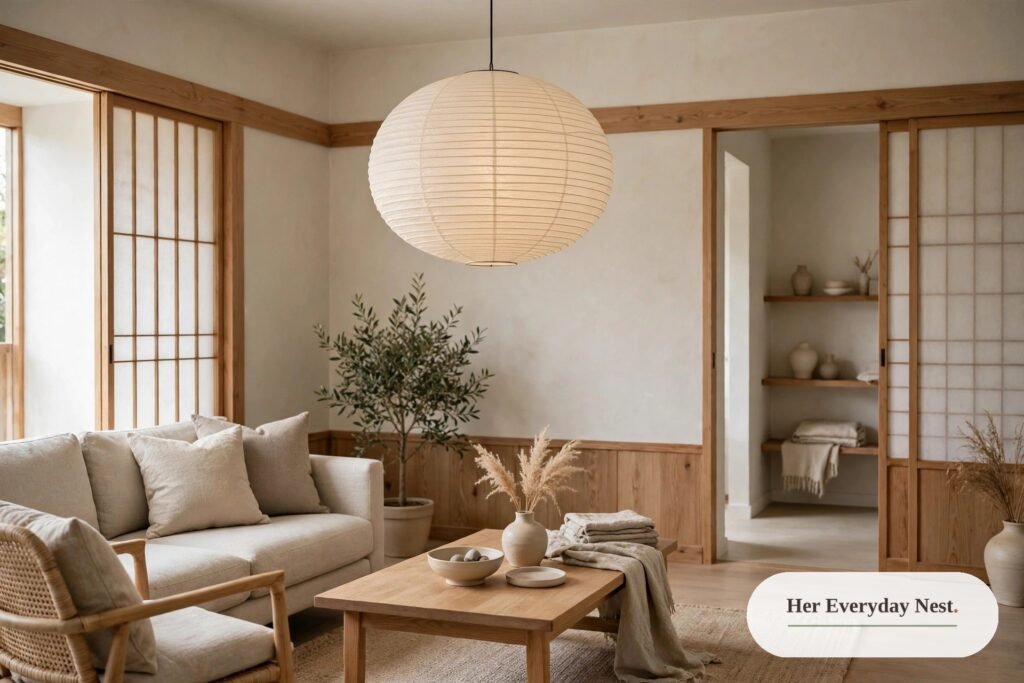
14. Add a shoji screen as a divider. A wooden screen with translucent rice paper divides an open-plan room softly, diffusing light in a way no solid divider can.

15. Frame windows with sheer linen curtains. Floor-to-ceiling sheer linen in white or oatmeal, hung from just below the ceiling, filters light beautifully and makes windows feel taller.
16. Try black window frames for contrast. Simple black or charcoal frames echo Japanese minimalism while the soft linen beside them keeps the room warm.
17. Add a vertical wood slat wall. Pale wood slats on one wall add warmth and texture without pattern or color, and they suit the wall behind a sofa or television.
18. Keep the fireplace minimal. A simple plaster or limewash hearth with no mantel and no surround lets the fire itself be the focus, with one muted artwork or blank wall above it.
Texture, Greenery and Finishing Touches
19. Layer a chunky wool or jute rug. One large rug under the seating area, leaving plenty of pale wood floor visible around it, warms the room without busy pattern.
20. Choose one statement plant, not a jungle. A single tall branch in a floor vase or one bonsai on a low table draws the eye far more effectively than a dozen small plants.
21. Use a single large ceramic floor vase. A vase over 60cm tall with one dried branch fills an empty corner that would otherwise feel cold, and doubles as sculpture.
22. Hang one large artwork above the sofa. Where most living rooms cluster gallery walls, Japandi commits to one oversized piece in muted beige and cream tones.
23. Add natural linen cushions only. Stick to linen and cotton cushions in cream, oatmeal and stone — no shiny fabrics, no bright prints — and the sofa stays calm.
24. Bring in a concrete or stone accent. A concrete side table, a stone bowl or a limewash wall adds an earthy, handmade weight that balances all the soft linen.
25. Create a Japandi reading corner. One oversized floor cushion, a small wood stool as a side table, a paper lantern floor lamp and two or three books on the floor make a nook in under a square metre.
26. Repeat ceramics across the room. Using the same earthy ceramic tones on the coffee table, the shelf and the console ties the room together without matching sets.
27. Leave deliberate empty space. An empty corner, an empty shelf or a bare stretch of wall is not unfinished in Japandi — it is the breathing room the style depends on.
28. Soften the room with a wool throw. A single chunky wool throw in cream over the sofa arm adds the cozy Scandinavian layer that keeps minimal rooms warm.
29. Use warm bulbs everywhere. Warm-white lighting, especially through paper lanterns and linen shades, keeps pale woods and creams glowing in the evening instead of turning grey.
30. Edit one surface every week. Japandi is maintained by editing, not buying. Remove one object from a surface each week until what remains is only what you genuinely love or use.
How to Start Japandi on a Budget
These japandi living room ideas reward editing more than spending, which makes Japandi one of the cheapest styles to start. Begin by removing what you do not need, then add pale wood, linen and one or two handmade-style ceramics gradually. Slipcovers in oatmeal linen can transform an existing sofa, sheer linen curtains are usually affordable, and a single paper lantern pendant costs far less than a designer light while changing the whole mood of the room.
If you are working in a rental, focus on the reversible moves: curtains, cushions, throws, rugs, lamps and freestanding screens. For more rental-friendly room ideas, see our fall living room decor ideas and studio apartment ideas, or steal the compact-corner trick from our reading nook ideas. For wider living room inspiration, browse the room guides at Architectural Digest and House Beautiful.
Mistakes That Break the Japandi Look
Most failed japandi living room ideas fail for the same three reasons. The most common mistake is going too cold: all white, no texture and no warm wood turns Japandi into a showroom instead of a home. Add boucle, wool, oak and warm light to keep it livable. The second mistake is over-decorating surfaces — every extra object chips away at the calm. And the third is mixing in bright colors or busy patterns, which fight the quiet palette the whole style is built on. When in doubt, take one thing away.
Final Thoughts
A Japandi living room is not about owning less for its own sake — it is about choosing what earns its place, and that is why japandi living room ideas stay popular long after other trends fade. With a low sofa, pale wood, one beautiful ceramic and soft paper-lantern light, these japandi living room ideas can make even an ordinary room feel like a retreat. Start with the anchor piece, clear one surface, and let the calm build from there.
Frequently Asked Questions
What is a Japandi living room?
Japandi blends Japanese wabi-sabi — the beauty of imperfection and natural materials — with Scandinavian warmth and function. The result is a calm, uncluttered living room in pale woods, cream linen and earthy ceramics.
What colors work best in a Japandi living room?
Stick to a quiet palette of cream, oatmeal, stone, pale oak and soft earth tones, with black or charcoal used sparingly as an accent. Avoid bright colors and high-contrast patterns.
How do I make a small living room look Japandi?
Choose low-profile furniture, keep surfaces mostly clear, hide clutter in closed storage and use one or two natural textures. Low furniture makes ceilings feel taller and the room feel larger.
Is Japandi living room decor expensive?
Not necessarily. The style favors fewer, better pieces, and many Japandi looks come from editing what you own, adding pale wood, linen and handmade-style ceramics gradually rather than buying everything at once.
Can a Japandi living room still feel cozy?
Yes — that is the Scandinavian half of the style. Boucle, wool throws, warm wood, soft paper-lantern light and one or two plants keep a Japandi room warm rather than cold or empty.

Emily Carter is the founder and editor of Her Everyday Nest. After nine years of renting in five apartments across three cities, she's learned how to make any rental feel like home.